Beef tallow kept showing up in my feed and I kept scrolling past it. Mentally filed it somewhere between "seed oil discourse" and "things I'm not engaging with this week" — which, for the record, is a very full folder.
What eventually moved it was how many different kinds of people were quietly reporting back positively. Not just the raw-everything crowd or the trad-wife corner of Instagram — a genuinely wide range of people making it themselves for about $20 and saying it worked. That's a different signal than trend-launch hype.
I looked at the ingredient profile. Then I made the balm. The profile is more interesting than I expected, and the balm is on my bathroom shelf. That's where I'm writing from.
What beef tallow actually is, and why it's trending
Tallow is rendered and filtered animal fat — beef, in this case, specifically from around the kidneys, a cut called suet. Rendered down, it's a pale, firm, slightly waxy substance with a very mild scent that mostly disappears once it's whipped and diluted with a carrier oil. It has been used on skin and hair for centuries across cultures, well before the rise of petrolatum and mineral oil as the cosmetic industry's preferred occlusives of the twentieth century.
The current trend is genuinely a backlash story: a lot of people who've become skeptical of synthetic cosmetic ingredients, particularly those with no food or traditional use history, are gravitating toward something they can verify is... just one thing. Rendered tallow from a regenerative farm you found on Etsy. That's it. No emulsifiers, no stabilizers, no phenoxyethanol. The "clean beauty" instinct meets the DIY instinct meets TikTok, and you get a beef fat moment.
Whether or not you share the underlying philosophy, the ingredient itself is worth understanding on its own terms.
What the skin science actually says about animal-fat occlusives
Tallow's composition is surprisingly close to human sebum. It's roughly 50-55% oleic acid (same as skin), significant amounts of palmitic and stearic acid, and small but notable concentrations of fat-soluble vitamins — A, D, E, and K — that survive the rendering process in varying amounts depending on sourcing. This isn't a coincidence; historically, the theory is that an evolutionary closeness between bovine and human skin fat made tallow a biologically compatible topical before modern cosmetics existed.
What does that mean practically? As an occlusive, tallow creates a physical barrier on the skin's surface that slows transepidermal water loss (TEWL). This is exactly what petroleum jelly and dimethicone do — tallow is just doing it with a fatty acid profile that's more structurally similar to the skin's own natural oils. That similarity in theory means better integration with the skin barrier rather than just sitting on top of it, though the honest answer is that the clinical literature specifically on tallow as a topical is sparse. The broader science on oleic acid as a skin-conditioning agent is well-established; tallow simply happens to be one of the better natural sources of it.
What tallow is not: a pore-clogger for most people, a miracle cure, a replacement for SPF, or necessarily superior to a well-formulated modern moisturizer. What it is: a genuinely interesting occlusive with a favorable fatty acid profile and essentially zero added ingredients, at a price point that makes it worth trying.
The real caveat: not all tallow is equal. Quality matters here in a way it doesn't for something like glycerin. Fat-soluble vitamins and the quality of the fatty acid profile depend on how the animal was raised. Grass-fed, regeneratively farmed tallow tends to have a better nutrient profile than conventional. Etsy has a surprisingly robust market of small suppliers who can tell you exactly where their tallow came from — which is part of why this trend lives there rather than at Sephora.
DOSSIER APPROVED RECIPE: Whipped Tallow Balm
Makes approximately 1 cup. Total time: 40–45 minutes active + chill time.
Ingredients: - 1 cup beef tallow (rendered and filtered — about ½ lb, sourced from Etsy or a local butcher) - 2–4 tbsp Naturevibe Botanicals Golden Jojoba Oil (also available at our full review) - 10–20 drops essential oils (optional — lavender, frankincense, or tea tree work well)
Instructions:
1. Melt: If your tallow is hard, gently melt it in a double boiler until just liquefied. Do not microwave — the fat can overheat unevenly and degrade the vitamins you're trying to preserve.
2. Mix: Add jojoba oil while still warm. Stir to combine. Jojoba is technically a liquid wax, not an oil, and it acts as a lightweight carrier that softens the tallow without changing its occlusive character.
3. Cool: Let the mixture cool until it begins to solidify but is still soft — about 20–30 minutes in the fridge works perfectly. You're looking for the consistency of softened butter, not liquid and not fully hard.
4. Whip: Using a hand mixer or stand mixer, whip the semi-solid mixture until light and fluffy — about 5–10 minutes. This is where the texture transforms. You'll go from a slightly greasy paste to something genuinely cloud-like.
5. Add essential oils if using, and whip briefly again to incorporate.
6. Store: Spoon into a clean glass jar with a lid. A small jar fits perfectly in your bag. Shelf-stable for several months in a cool dry place.
Note: If it feels too greasy on your skin, add a little more jojoba oil next time for a lighter texture. If it's too firm straight out of the fridge, give it a few minutes at room temperature before using.
I use this on my hands, elbows, décolleté, and the backs of my arms. Some days it goes on my face too — I listen to my skin. It costs about $8 per batch once you have your supplies.
If you'd rather skip the kitchen: the upgrade I actually reach for
Here's the thing about DIY: I love it when the return on effort makes sense. And for a body balm, the effort-to-result ratio on whipped tallow is good. But I want to be real that there are also days when I'm not melting anything, and on those days the products I actually reach for — products I've been using for years and would recommend regardless of what trend happened to be going around — are doing the same fundamental job: feeding the barrier, not fighting it.
OSEA's full line is the one I default to when I want the same barrier-support payoff without a double boiler. Their formulations are seaweed-based and genuinely well-made — the kind of thing you can use for years without ever second-guessing the ingredient list. (Code XOR10 for 10% off, always.)
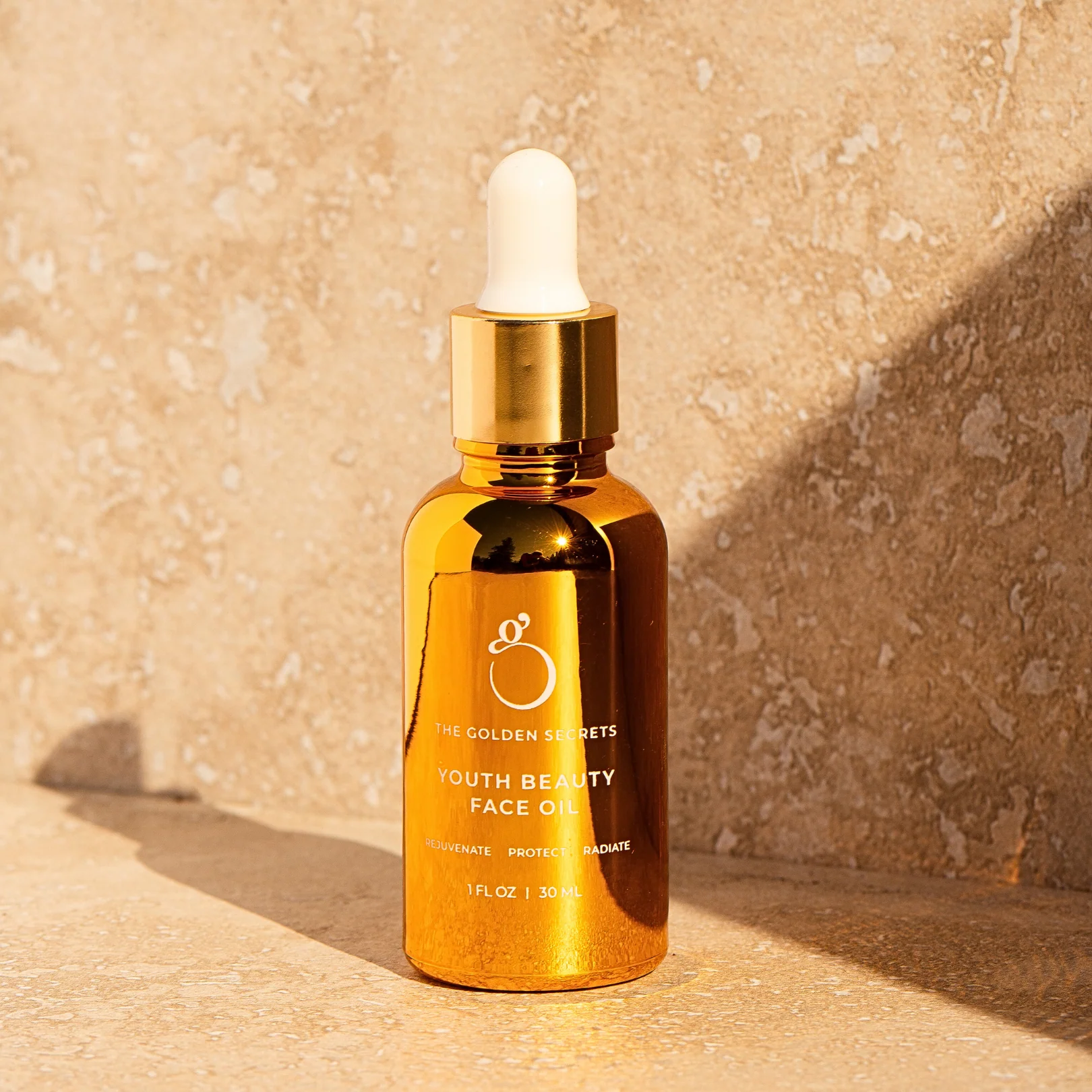
And the Golden Secrets Youth Oil is what I reach for when I want something richer on my face and neck — rosehip, sea buckthorn, 24k gold, plant stem cells. It's rooted in Ayurvedic tradition and it performs like it. Same code, XOR10, for 10% off. I've written more about why these two anchor my actual routine in my essay on stripping back to what actually works.
Both options are doing what tallow does — supporting the barrier, locking moisture in, feeding the skin's own processes — just with a different supply chain and more zeroes on the price tag. Which one you choose depends on whether tonight is a kitchen night or not.
The part where I place the tallow trend
Beef tallow skincare is not going to replace clinical actives. It's not going to change the outcome for people dealing with serious skin conditions. The science on it is thin relative to retinoids, AHAs, niacinamide — none of the established, well-studied actives are going anywhere.
But I think the interest in it is telling us something real about what people are tired of: long ingredient lists they can't interpret, luxury pricing for what is functionally a vessel of emulsifiers, and the sneaking suspicion that they've been convinced to buy a complex solution to a simple problem. Rendered animal fat from a local butcher applied with your hands is as simple as it gets. And simple, when it's biologically compatible and well-sourced, is sometimes actually the right answer.
I'm not swapping out my OSEA cleanser for it. But I've got a jar on my bathroom shelf and I'm not embarrassed about it. The Dossier doesn't do trend-chasing, but it also doesn't do trend-dismissing. This one earned its spot.
If you want to see how occlusive ingredients compare across our reviewed products, our comparison tool is a good place to start — and our methodology page explains how we weight barrier support in the scoring rubric.