Here's the thing nobody in this industry has much incentive to tell you, because there's no serum commission in it: you can have a flawless ten-step routine, the best vitamin C on the market, a barrier-safe cleanser, the works — and still wake up dull and tight every morning if the air in your bedroom is working against you all night. Most of the conversation around skincare obsesses over what you put ON your skin. Almost nobody talks about what your skin is sitting in for eight hours while you sleep.
That's the air conditioning gap, and it's bigger than most people realize. We touched on this in our piece on summer skin and AC dryness, but it deserves its own deeper look — because the fix isn't a product you apply, it's a tool you run in the background, and it's quietly one of the most underrated things you can do for your skin at any age.
What air conditioning is actually doing to your face while you sleep
Air conditioning cools a room by removing humidity from the air — that's the mechanism, full stop. It's functionally a dehumidifier with a cooling feature attached. Every hour you spend in an air-conditioned room, the air around you is getting drier, and your skin — the largest organ you have, constantly losing and regulating water — is sitting directly in that dry environment for the entire stretch of sleep.
The result is transepidermal water loss, or TEWL: water evaporating off the skin's surface faster than it should, into air that's actively pulling moisture out of anything exposed to it. This isn't a dramatic, visible event. It's slow and cumulative, which is exactly why people miss the cause. You wake up dull, a little tight around the cheeks, maybe with some flaking near the nose, and you blame the moisturizer, or the cleanser, or "just getting older" — when the actual culprit was the vent humming over your bed all night, quietly drying out a room you spent eight unconscious hours in.
This is the same mechanism we cover in detail in our skin barrier guide — a compromised barrier loses water faster than a healthy one, and dry air accelerates that loss regardless of how intact your barrier is to begin with. You can have the best barrier-repair routine in the world and still lose the overnight battle if the room itself is fighting you.
The humidity number that actually matters: 40-60%
Dermatology research points to a specific target: skin functions best, retains moisture most efficiently, and shows the fewest signs of dehydration-related dullness when ambient relative humidity sits between 40% and 60%. Below that range, the air starts pulling water from skin faster than skin can replace it — and most air-conditioned bedrooms, especially in summer, run well below 40%, sometimes into the 20s and 30s depending on how hard the unit is working.
This is a measurable, fixable number, not a vague wellness gesture. A fifteen-dollar hygrometer will tell you exactly what humidity your bedroom is sitting at right now, and for a lot of people the answer is going to be uncomfortably low. The fix isn't complicated: add moisture back into the air mechanically, with a humidifier, and let the room do passive work that no amount of active skincare can fully replace.
Why a humidifier is the foundation, not an add-on
Here's the part that reframes the whole conversation: a humidifier doesn't compete with your skincare routine, it makes every part of it work better. A hyaluronic acid serum is a humectant — it draws and holds water at the skin's surface. If the air around you is at 25% humidity, that serum is fighting an uphill battle all night, slowly losing the water it pulled in to air that wants it back. If the air is at 45-50%, that same serum has a much easier job, because the environment isn't actively working against it.
The same logic applies to moisturizers generally — we go into texture and ingredient choices in our moisturizer guide, but no moisturizer, regardless of how well-formulated, fully offsets a bedroom that's actively dehumidifying your face for eight hours straight. A humidifier is the rare skincare-adjacent tool that's passive, ambient, and works the same whether you remember to apply it correctly or not. You just run it, and it does its job in the background.
This matters more, not less, as skin ages. Mature skin loses moisture faster overnight than younger skin does — sebum production naturally declines, and the barrier's lipid matrix has less to work with, so the margin for error in a dry room is thinner. If you're in your 40s, 50s, or 60s and have noticed your skin getting more reactive to dry conditions than it used to be, the air in your bedroom is a more relevant variable than it was a decade ago, not less.
How the top humidifiers compare
We tested this category the way we test everything: ingredient and build quality, hygiene, real-world ease of use, and value relative to price. Full breakdown of how each dimension is weighted is in our scoring methodology.
| Product | Best For | Score | Tier |
|---|---|---|---|
| Blueair DreamWell 3.8L | Standard bedrooms | 8.1 | A |
| Blueair DreamWell 7.6L | Larger or open-plan rooms | 8.0 | A |
| Carepod One | Hygiene-focused, filter-free | 7.3 | B |
| Blueair 2-in-1 Purify + Humidify | Air quality + humidity together | 7.1 | B |
The hero pick: Blueair DreamWell
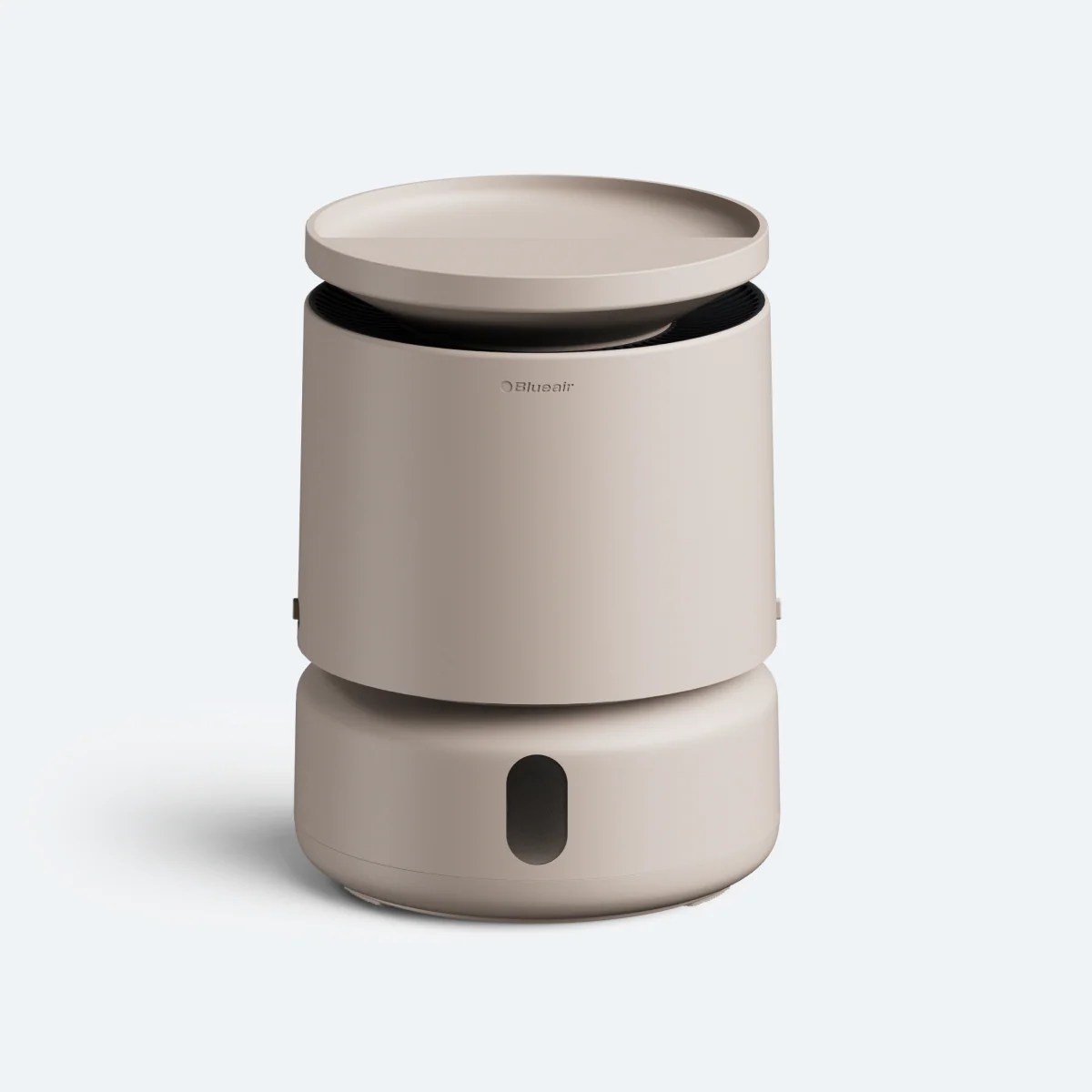
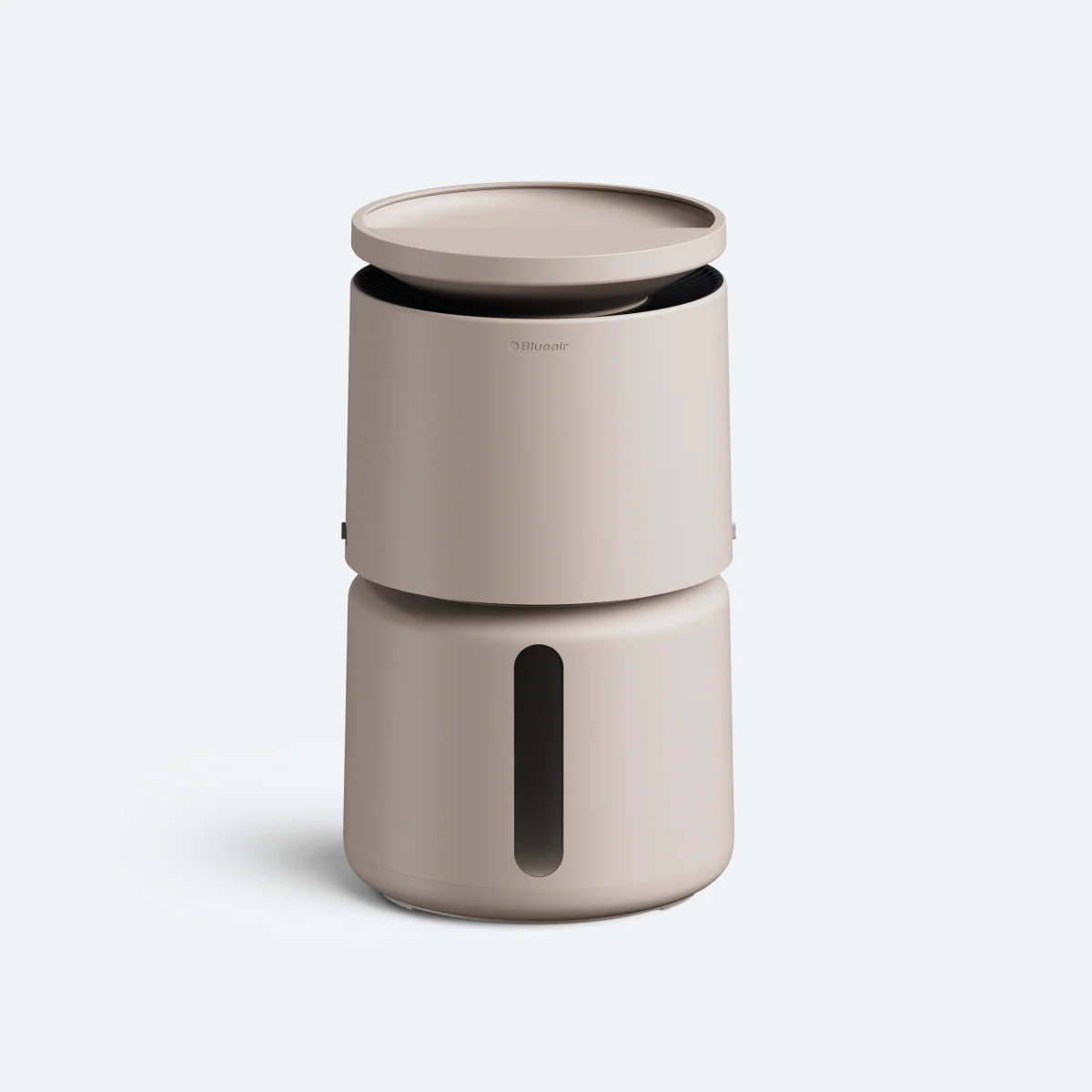
For most bedrooms, the Blueair DreamWell 3.8L is where we'd point almost anyone starting from zero. It's a compact, top-fill ultrasonic cool-mist humidifier sized correctly for a standard bedroom — easy to clean, easy to refill, and unobtrusive enough that it becomes a habit rather than a chore. If your room runs larger, or you'd rather not refill nightly, the Blueair DreamWell 7.6L covers more square footage and runs through a full night without a refill.
Full transparency: this is also what our founder R actually uses. Not because it's the most expensive option in the category, but because it's reliable, it's sized right for an actual bedroom, and it does the one job it needs to do without turning into a maintenance project.
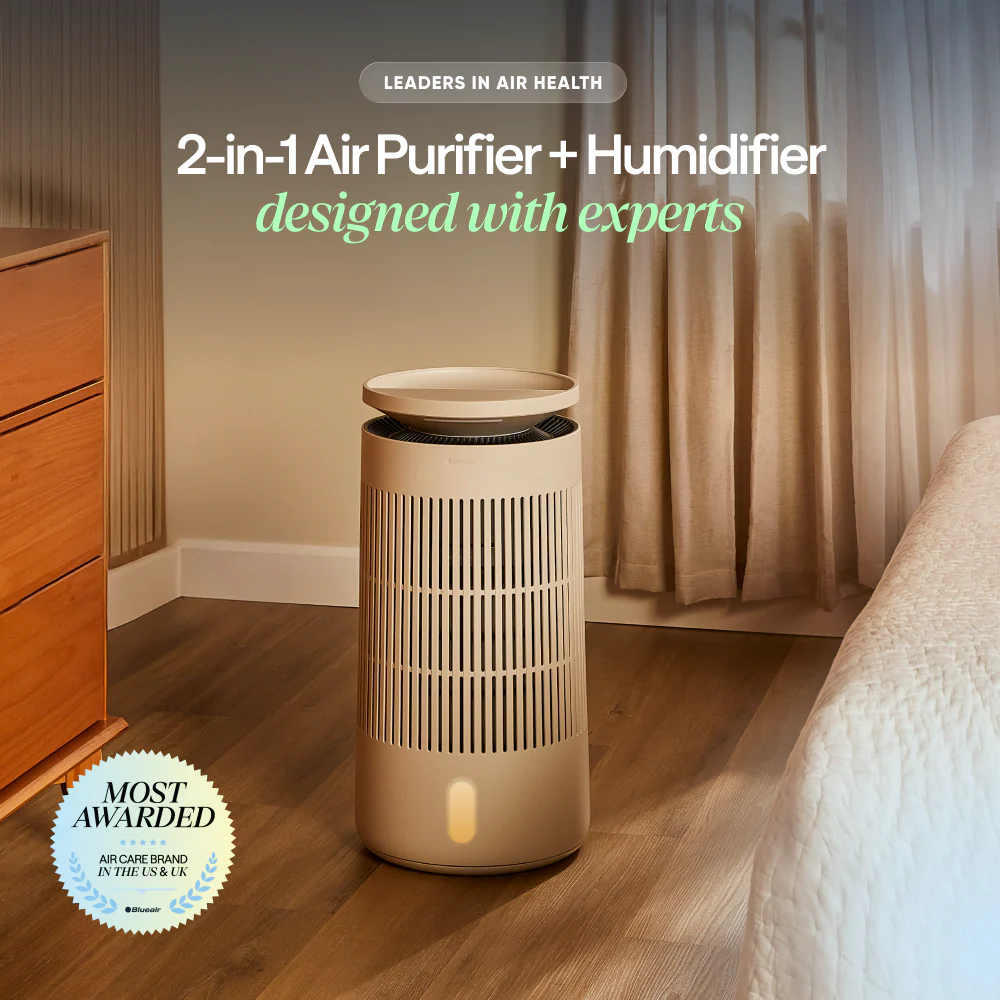
For anyone who wants to solve two problems with one device — dry air and indoor air quality, particularly relevant if allergens or seasonal irritation also affect your skin — the Blueair 2-in-1 Purify + Humidify is the upgrade pick. It does more, costs more, and takes up more room, which is why it scores a tier below the dedicated DreamWell units on value — but if you're already shopping for an air purifier separately, getting both functions in one well-built device is genuinely efficient.
The premium alternative: Carepod One
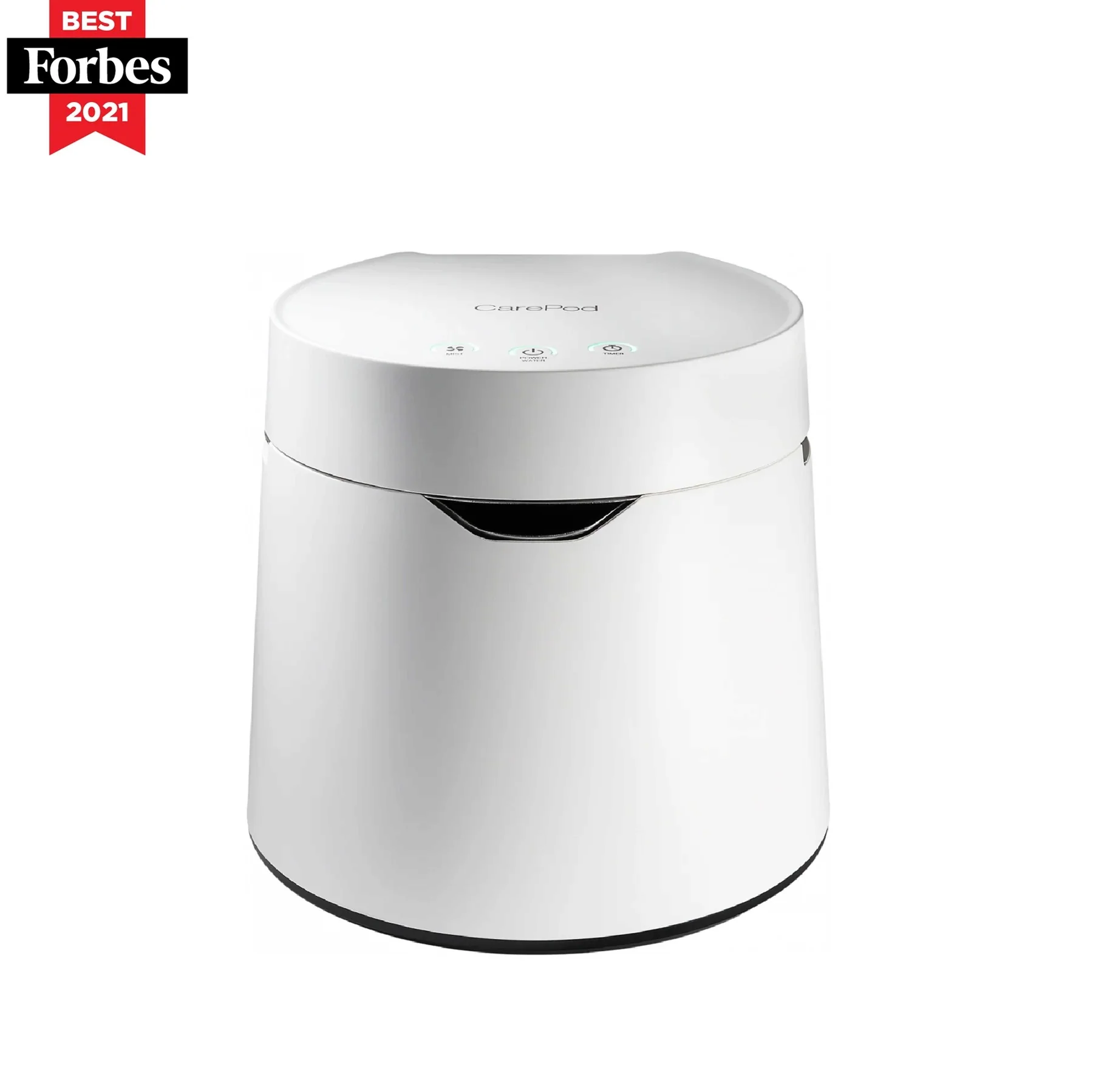
The Carepod One deserves real credit for solving a problem most humidifiers don't even acknowledge: traditional units, especially ones with filters and hard-to-reach water tanks, are a genuine breeding ground for mold and bacteria if you're not scrupulous about cleaning them. Carepod's filter-free, stainless steel, fully dishwasher-safe design — built by a doctor specifically to eliminate hidden crevices where buildup accumulates — is a legitimately smart piece of engineering, and for anyone who's ever opened up an old humidifier tank and regretted it, this is the product that fixes that problem at the design level rather than asking you to just clean harder.
Where it falls short of being the default pick for most people: it carries a meaningfully higher price than the DreamWell line, and its form factor is smaller, which means less coverage per unit if you're trying to humidify a larger room. It's a genuinely excellent product — just a more specialized one, best suited to people for whom hygiene and build quality are the deciding factor over price and room coverage. For most bedrooms and most budgets, Blueair offers the better combination of value and size options.
The bottom line
A humidifier is not a glamorous addition to a routine. It doesn't have a satisfying texture, it won't show up in a "what's in my skincare bag" post, and nobody's influencer partnership is built around a box that quietly hums on a nightstand. But it is, genuinely, one of the highest-leverage things you can do for your skin — because it fixes the environment every other product has to perform in, rather than adding one more step that's fighting the same uphill battle every night.
If you're already investing in good actives and a solid barrier-support routine, a humidifier is the unsexy multiplier that makes the rest of it work the way it's supposed to. This is especially worth taking seriously if you're in your 40s, 50s, or 60s, where moisture loss overnight happens faster and the margin for a dry room is thinner than it used to be — but it's a reasonable upgrade at any age.
Use our comparison tool to stack these humidifiers, or any product in our database, side by side before deciding what's worth adding to your setup.
This post contains affiliate links. We may earn a commission if you purchase through them, at no cost to you. Affiliate relationships do not influence our scores or recommendations.