The moisturizer you used in your 30s may still feel fine in your 40s and noticeably insufficient by your 50s. This is not a failure of the product. It is a change in what the skin needs — specifically, a shift toward a deeper lipid deficit, slower barrier repair, and a reduced capacity to hold moisture in the upper skin layers that a lighter, humectant-forward gel cannot fully address.
Most of the moisturizer market is formulated for younger skin — or for the idea of younger skin. Products that photograph well in advertising, that absorb in seconds and feel weightless, that prioritize elegance of texture over depth of nourishment. For skin in its 40s, 50s, and beyond, that optimization often misses the biological reality of what the skin actually needs to function well.
This guide covers the four moisturizer ingredient categories and why all of them matter for mature skin, the practical difference between day and night moisturizers, the products that score highest in our database for barrier support and hydration, and what to know about fragrance in the category.
What Mature Skin Actually Needs in a Moisturizer
Moisturizers work through four distinct mechanisms, and the most effective formulas for mature skin engage all of them rather than relying on one.
Humectants draw water from the environment and from deeper skin layers toward the surface. Hyaluronic acid, glycerin, and sodium PCA are the most common. They produce an immediate plumping effect and are well-tolerated across all skin types. Their limitation: in low-humidity environments, they can draw moisture upward and let it evaporate if there is no occlusive layer on top to trap it. They also do not address the lipid deficit that drives increasing dryness in mature skin — they manage water content, but the structural lipid problem requires different ingredients.
Emollients fill the gaps between skin cells in the stratum corneum — the lipid-filled intercellular spaces that give the barrier its structure. Plant oils, fatty acids, and ingredients like shea butter and ceramides function as emollients. They improve skin texture, reduce transepidermal water loss, and directly address the lipid depletion that makes mature skin feel dry even with adequate water intake. This is where gel moisturizers typically fall short: most gel formulas are humectant-heavy and emollient-light, which addresses the surface sensation without the underlying structural need.
Occlusives seal the surface of the skin, reducing water evaporation. Petrolatum is the most effective occlusive available and also the most maligned in clean beauty circles (it is inert, non-comedogenic, and has decades of safety data — but it does not photograph elegantly). Squalane, beeswax, and plant waxes are lighter occlusives that provide a meaningful seal without the texture of petrolatum. An occlusive layer over a humectant is what locks hydration in rather than letting it evaporate.
Ceramides are not simply moisturizing — they are structural. They form approximately 50% of the intercellular lipid matrix in the stratum corneum, and their production declines measurably with age. When ceramide levels drop, the barrier becomes more porous: more moisture escapes, more irritants get in, and the skin's ability to repair itself after disruption slows. Replenishing ceramides topically is one of the most directly evidence-backed interventions for improving barrier function in mature skin. Our full guide to the skin barrier covers how the lipid matrix works and why ceramide-inclusive moisturizers address the mechanism rather than just the symptom.
The pattern that works for mature skin: a humectant serum on damp skin, followed by an emollient-rich moisturizer that includes ceramides, finished with a face oil or lightweight occlusive in the evening. Each layer addresses a different part of the hydration and barrier equation. A single-step gel moisturizer, applied once, on dry skin, and expected to do all of it — is asking too much of the wrong formula.
Day vs. Night Moisturizer — What the Distinction Actually Means
The day vs. night moisturizer category exists partly for biological reasons and partly for marketing. The biological reason: at night, the skin goes into active repair mode. Cell turnover is higher in the evening hours, and the occlusive environment of sleep — no environmental exposure, no need to layer SPF on top — allows for richer, more occlusive formulations that would feel heavy during the day.
A daytime moisturizer ideally is light enough to layer cleanly under SPF without pilling or disrupting the SPF film. It should not contain active ingredients that sensitize the skin to UV — retinoids and AHAs are evening actives, not morning ones, so a daytime moisturizer does not need to avoid them unless you are using them in the moisturizer itself.
A nighttime moisturizer can be richer. Adding a face oil as the final layer in the PM routine is one of the most effective ways to provide the occlusive seal that locks in everything applied underneath — for mature skin in particular, where the natural sebum occlusive layer has thinned. The oil does not moisturize by adding water; it seals what is already there.
The honest version: if you have one moisturizer you love and it is comfortable both morning and night, you do not need a separate day and night product. What the category genuinely supports is the idea of a richer PM application — which can be achieved with the same product applied more generously at night, or with a dedicated face oil as the PM final step.
For what skin in its 50s and 60s is actually doing biologically and why barrier-focused moisturizing matters more at this decade than any earlier one, our piece on skin in your 50s and 60s covers the physiological context.
How These Products Scored
We weighted Ingredients & Safety and Skin Compatibility most heavily in this category — barrier support is the goal, and formulation quality determines whether a moisturizer delivers it or just feels good briefly. See the full scoring methodology for how each dimension is weighted.
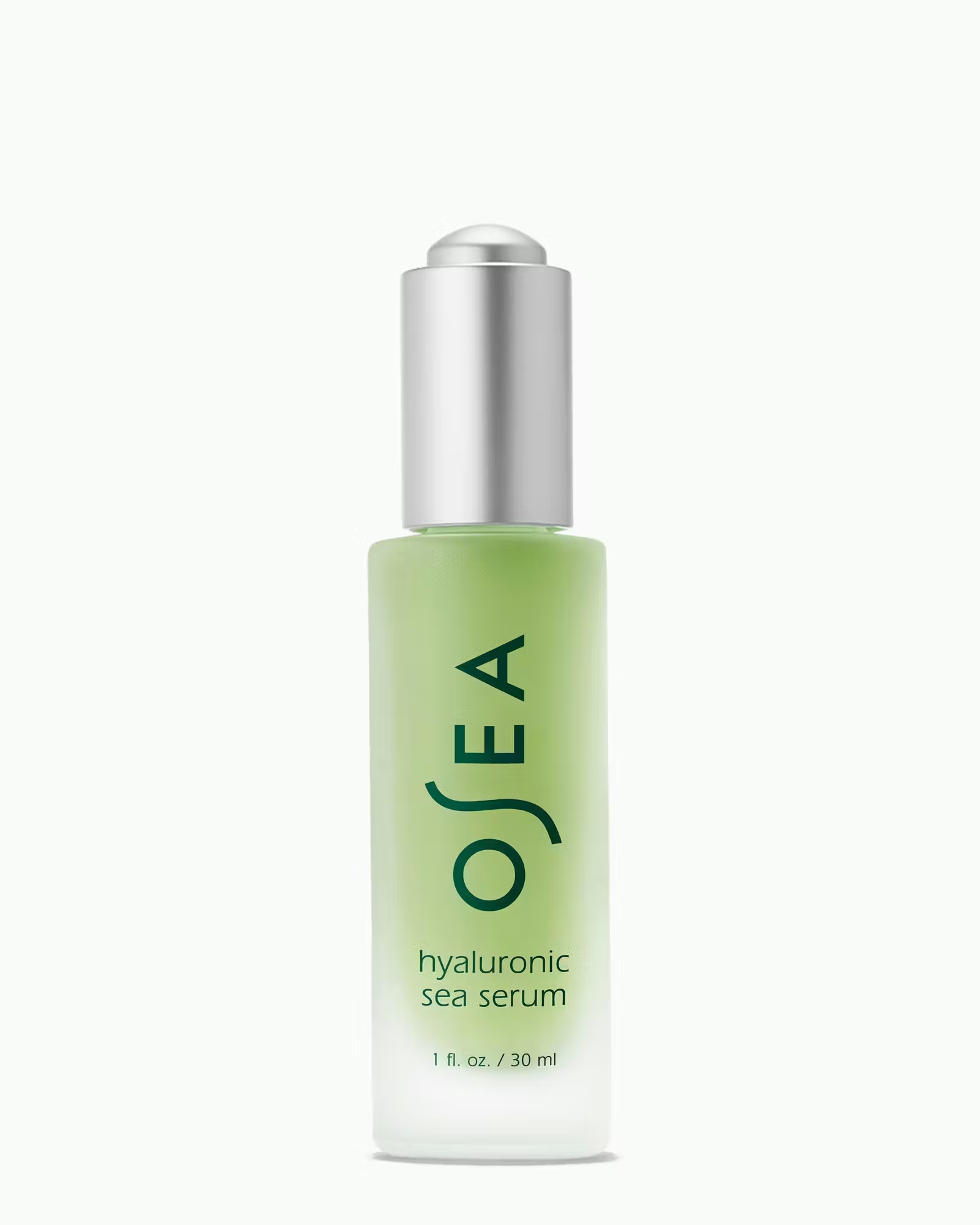
Tier A — OSEA Hyaluronic Sea Serum · 8.8/10 · $72
The highest-scoring OSEA product in our database for hydration and barrier support. The OSEA Hyaluronic Sea Serum (use code XOR10 for 10% off) is built around three molecular weights of hyaluronic acid — low, medium, and high — delivering hydration at different depths simultaneously, alongside Atlantic Kelp, Spirulina, and Sea Buckthorn as co-actives. In the context of a moisturizing routine for mature skin, it functions best as the humectant layer applied to damp skin before a richer emollient-occlusive moisturizer — the hydration foundation that the subsequent layers seal and support.
Score breakdown: Feel & Experience 9.5 · Ingredients & Safety 9.5 · Skin Compatibility 9.5 · Ease of Use 9.5 · Results 9.0 · Brand Trust 9.0 · Aesthetic & Packaging 8.5 · Price Value 7.5.
The 7.5 on Price Value reflects that $72 is a meaningful spend for a hydration serum — the premium is for the EWG Verified clean credentials and the marine active co-formulation, not for the hyaluronic acid itself. Universal age-decade compatibility: 9.0 across the 20s, 30s, and 40s; 8.5 in the 50s and 60s+. Works for every skin type. Apply to damp skin before any moisturizer for best results.
For a dedicated moisturizing cream from the OSEA line, their Advanced Protection Cream (use code XOR10 for 10% off) is the brand's flagship facial moisturizer — ceramide-supporting, seaweed-fortified, and formulated for the richer hydration needs of skin in the 40s and beyond. It is not yet in our scoring database, but it carries the same Think Dirty and EWG Verified credentials as the rest of the OSEA range and is worth considering as the emollient layer over the Hyaluronic Sea Serum. For the full OSEA brand breakdown, see our complete OSEA review.
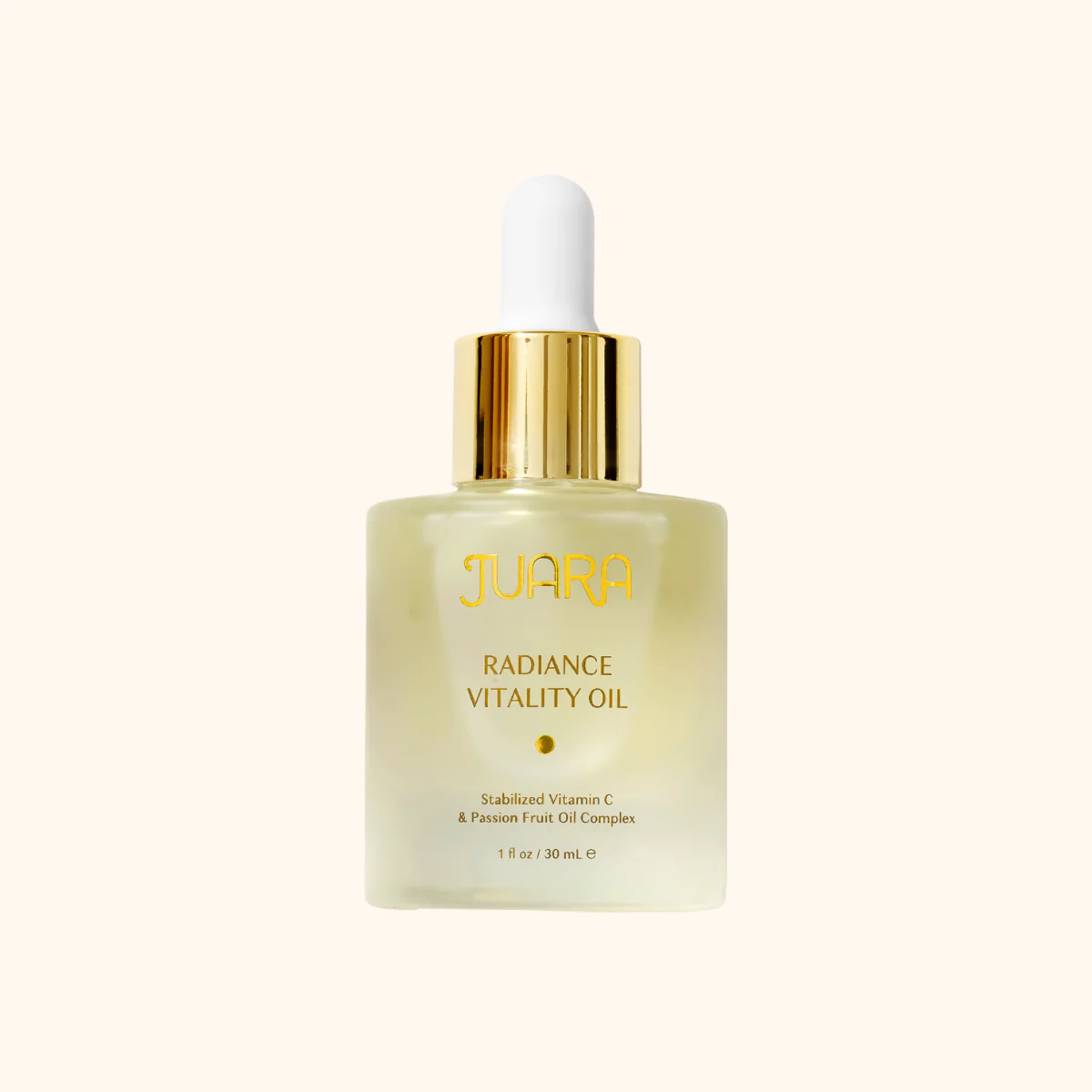
Tier A — Juara Radiance Vitality Oil · 8.3/10 · $52
The Juara Radiance Vitality Oil is not a moisturizer in the traditional sense — it is an Ayurvedic-influenced face oil. In the context of mature skin moisturizing, it functions most effectively as the PM final step: the emollient-occlusive layer that seals hydration and nourishes the barrier overnight, applied over a water-based moisturizer or serum.
Score breakdown: Feel & Experience 9.0 · Results 8.5 · Ingredients & Safety 8.5 · Brand Trust 8.5 · Price Value 8.5 · Ease of Use 8.5 · Skin Compatibility 8.0 · Aesthetic & Packaging 8.5.
Key ingredients: Candlenut Oil (oleic and linoleic fatty acids for lipid matrix support), Turmeric Root (anti-inflammatory, antioxidant), Tamanu Oil (barrier repair evidence), Rosehip Oil (vitamin A precursors, omega fatty acids). Age-decade scores: 40s 9.0, 50s 9.0, 60s+ 8.5, 30s 8.5, 20s 7.5 — the product earns its highest scores where the lipid-replenishing need is strongest.
Trade-offs: scented (turmeric and clove are perceptible), which means it is not appropriate for fragrance-sensitive skin. And the oil texture is not suited to oily or breakout-prone skin types.
Budget tier — what to look for under $30
At budget price points, the ingredients worth prioritizing are ceramides, glycerin, and at least one fatty acid or plant oil in the emollient position. Niacinamide is a bonus for its barrier-supportive and tone-evening properties. The formula type to avoid: gel moisturizers with a long list of humectants and minimal emollient content — they feel hydrating initially but do not address the lipid dimension.
On Amazon, CeraVe Moisturizing Cream and similar ceramide-inclusive drugstore formulas represent the strongest evidence-to-price ratio in this tier for mature skin — they are not clean beauty and they are not luxury, but the ceramide formulation is genuinely supportive of barrier function. Look for ceramide NP, ceramide AP, and ceramide EOP listed in the ingredients.
On Fragrance — Knowing When It Matters
A meaningful portion of the best-formulated moisturizers for mature skin contain fragrance — botanical oils, essential oils, or fragrance blends that contribute to the sensory experience. For most people, this is not a clinical problem. For skin with fragrance sensitivity or a compromised barrier, it is a real consideration.
The practical test: if your skin consistently stings, reddens, or feels reactive within 20 minutes of applying a moisturizer, fragrance is one of the first variables to eliminate. Switch to a fragrance-free formula for four weeks and assess whether the reaction resolves. If it does, fragrance was the issue. If it does not, the reaction may be to another ingredient and the investigation continues.
Most of the moisturizers in the budget tier are fragrance-free or lightly scented. OSEA's formulas carry a natural marine scent from the seaweed actives. Juara's Radiance Vitality Oil is distinctly scented from its turmeric and botanical oil base. This is worth knowing before purchasing.
The Bottom Line
A moisturizer for mature skin earns its place by addressing all four hydration mechanisms — not just providing a pleasant surface experience. The routine that serves skin in the 40s, 50s, and beyond most effectively: humectant on damp skin, emollient-rich ceramide moisturizer, and a lightweight face oil as the evening seal. No single product needs to do all of it. The layers do it together.
Use the comparison tool to stack OSEA and Juara products against other barrier-support options in our full database.
This post contains affiliate links. We may earn a commission if you purchase through them, at no cost to you. Affiliate relationships do not influence our scores or recommendations.