Your skin barrier is not a marketing term. It is an actual anatomical structure — the outermost layer of your epidermis, technically called the stratum corneum — and its primary job is to keep the good stuff in and the bad stuff out.
When it is working well, you probably don't think about it. You wash your face, apply a few products, and your skin feels comfortable and balanced throughout the day. When it is compromised, you feel it almost immediately: tightness after cleansing, sensitivity where there was none before, products stinging that used to feel fine, redness that comes and goes without obvious cause, a dull or persistently dry texture that does not respond to moisturizer the way it used to.
Understanding what the barrier actually is — and what actually damages it — is one of the most useful frameworks you can bring to building a routine that works.
What the skin barrier actually is
The stratum corneum is the outermost layer of the epidermis. Anatomically, think of it as a brick wall: the bricks are corneocytes — flattened, protein-filled dead skin cells — held together by a mortar matrix of lipids. Specifically: ceramides, free fatty acids, and cholesterol in a carefully maintained ratio.
This lipid matrix is what prevents transepidermal water loss, or TEWL — the constant, passive evaporation of moisture through the skin surface. A healthy matrix holds water in and keeps irritants, allergens, and pathogens out. When the matrix is disrupted, moisture escapes faster, and things that should not penetrate the skin can.
Ceramides are the most critical component of this matrix. They account for roughly 50% of the skin's lipid composition, and their presence or absence is the single biggest determinant of how well your barrier retains moisture and resists environmental challenge.
The skin also maintains a naturally acidic surface pH of approximately 4.5 to 5.5 — the acid mantle. This acidity is critical to the enzymes that regulate cell shedding, the antimicrobial properties of the skin surface, and the balance of the skin microbiome. When pH is disrupted — shifted toward alkaline — these systems stop working correctly. Skin becomes more porous, more reactive, and slower to recover from stress.
What compromises the barrier
Four categories account for the majority of barrier disruption in practice:
- ◦Over-exfoliation. The most common culprit, and the one that tends to compound itself. AHAs, BHAs, physical scrubs, retinoids, and enzyme exfoliants all accelerate cell turnover. Used too frequently or at too high a concentration, they strip the lipid matrix faster than it can replenish. The result is a sensitized surface that stings on contact, flushes easily, and cannot retain moisture. Two to three times per week at appropriate concentrations is the functional ceiling for most skin types.
- ◦High-pH cleansers. Traditional soap and most foaming cleansers sit at pH 9 to 11. Your skin's acid mantle sits at 4.5 to 5.5. Cleansing with an alkaline product disrupts the acid mantle with every single wash — making skin more porous and reactive, disrupting the microbiome, and slowing recovery from all other stressors. If your skin feels tight or squeaky after washing, this is almost certainly why.
- ◦Harsh or incompatible actives. Vitamin C at too high a concentration for your skin. Retinoids introduced too quickly. Multiple actives used simultaneously without recovery phases built in. Each can be effective individually and over time — but only when introduced gradually, with adequate barrier support between applications.
- ◦Environmental stress. Low humidity draws moisture from the skin surface. Wind and cold compromise the lipid matrix. Indoor heating and air conditioning maintain chronically dry air. These are reasons to adjust seasonally and lean harder on barrier-supporting ingredients in winter.
What rebuilding actually looks like
Rebuilding a compromised barrier is not complicated. It is slow. And it requires the restraint to do less, not more — which is the hard part.
The first step is subtraction. Remove actives from the routine. Pause the exfoliant. Stop the retinoid. Take two full weeks doing nothing beyond a gentle cleanser, a barrier-supporting moisturizer, and morning SPF.
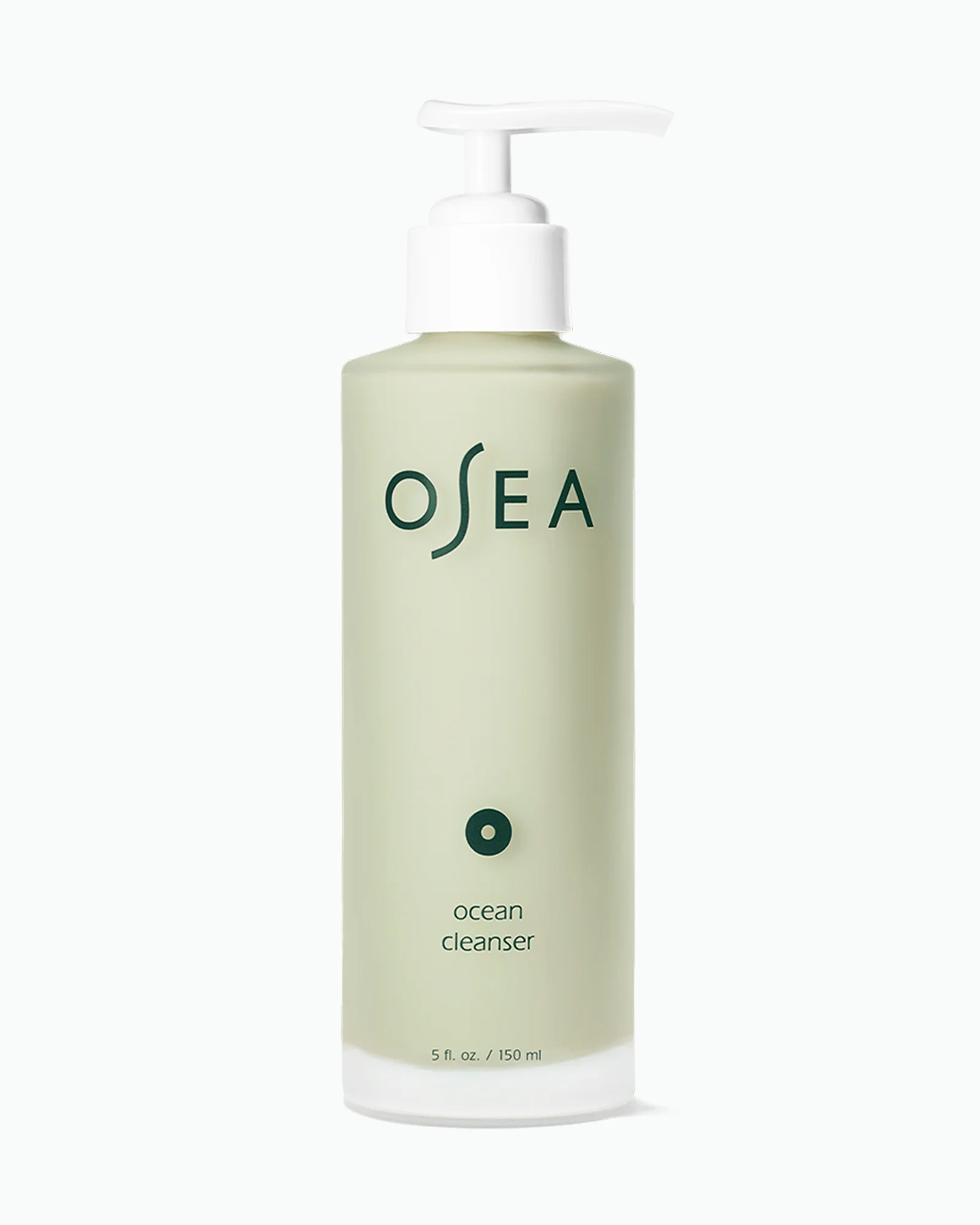
The second step is to fix the cleanser. This is the most important and most commonly skipped intervention. If your cleanser is alkaline and stripping, no amount of barrier-supporting product applied afterward will fully compensate — you are rebuilding twice a day while the cleanser tears it back down. We consistently recommend the OSEA Ocean Cleanser as a barrier-safe daily option. It scores 9.5/10 for skin compatibility in our database and earns our Age-Support flag — a sulfate-free gel with seaweed, aloe, and glycerin that cleans effectively without disrupting the acid mantle. If your face feels comfortable immediately after rinsing, the cleanser is doing its job.
The third step is to rebuild the lipid matrix. A ceramide-rich moisturizer, applied after a humectant on damp skin, delivers the building blocks the barrier needs to reconstruct itself. Apply hyaluronic acid or glycerin first, while skin is still slightly damp from cleansing. Seal with a ceramide moisturizer or nourishing face oil. In that order, every time.
The fourth step is to wait. Barrier repair is measured in weeks, not days. The skin's natural lipid synthesis is a slow biological process. Reintroducing actives before recovery is complete will interrupt the process and reset the timeline. Six to eight weeks of consistent, gentle support is what meaningful recovery typically requires.
Why less-is-more is not a consolation prize
The cultural instinct in skincare is to accumulate — more steps, more targeted actives, more solutions to more specific concerns. The industry rewards this impulse financially. But the skin barrier does not respond to complexity. It responds to consistency, gentleness, and appropriate chemistry.
Some of the worst barrier disruption encountered in reader feedback comes from people running elaborate, thoughtful routines that inadvertently strip faster than they repair. The individual products are often good. The combination is the problem. The solution in those cases is almost always subtraction, not addition.
A healthy barrier does not need a complicated routine to stay healthy. It needs its pH respected, its lipids replenished, and its natural cell turnover not constantly interrupted. Give it those things consistently, and it will do the rest.
See how we weight barrier health and skin compatibility in product scores on the methodology page. To compare barrier-safe options directly, the product comparison tool lets you filter by category and rank by any scoring dimension.
On reintroducing actives after recovery
Once your barrier has recovered — comfortable hydration throughout the day, no reactive stinging, smooth texture — you can begin reintroducing actives. The rule is one at a time, low concentration, gradual frequency.
Start with one exfoliant, once a week, for two weeks. Observe. If skin remains stable, add a second weekly application. Only after your exfoliation routine is stable should you consider adding a second active.
Retinoids deserve their own timeline. Begin with the lowest available concentration, once a week for the first month. Increase to twice weekly in the second month, only if skin remains comfortable. Patience here is not the boring option. Patience is the option that works.