Skincare DossierYour Skin in Your 40s: A Comprehensive Breakdown
Skin Science6 min read

Your Skin in Your 40s: A Comprehensive Breakdown

The 40s bring real physiological shifts. Knowing what's happening helps you choose products that genuinely respond to your skin — not marketing copy.

Dossier Editors·

The shift in skin physiology through your 40s is real, measurable, and worth understanding — not as a countdown, but as useful information.

Estrogen fluctuations begin to affect water retention. Your skin may feel dryer in ways it never did before, even if you're drinking plenty of water. This isn't a character flaw — it's biology. The fix: humectants, occlusives, and ceramide support. Not "firming serums."

Cell turnover slows. The average epidermal turnover that took ~28 days in your 20s begins to stretch toward 40–60 days. This means dead skin accumulates more noticeably, glow fades faster, and products may absorb differently. A gentle exfoliant — lactic acid, not harsh scrubs — can support this process.

Barrier function needs more backup. As you produce less sebum, your barrier's lipid matrix becomes less robust. This makes it easier for irritants to get in and moisture to get out. Ceramide-rich and barrier-supporting formulas earn their keep here.

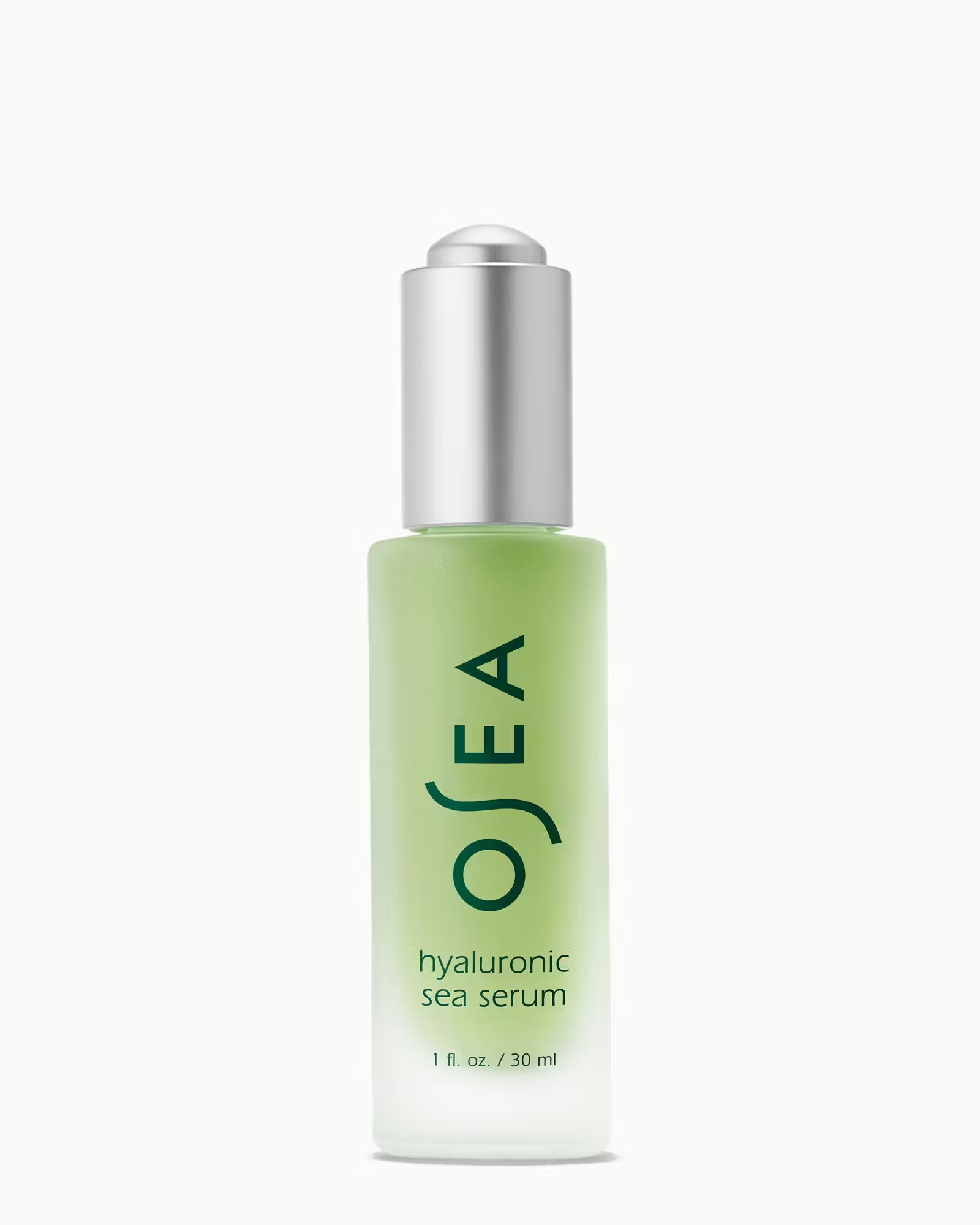
What to look for: Hyaluronic acid at multiple molecular weights. Ceramides. Peptides that support structural proteins (not "stimulate collagen" — that's marketing). Antioxidants for oxidative defense. Gentle exfoliation.

What to skip: Products banking on confusion between dryness and "aging." Harsh actives that compromise your barrier in exchange for a short-term glow.

Your skin in your 40s is capable, resilient, and entirely worth caring for thoughtfully.
Frequently Asked Questions

What actually changes in your skin in your 40s?

Four things change measurably: estrogen fluctuations begin affecting water retention, making skin drier in ways that often surprise people who never had dry skin before. Cell turnover slows from the ~28-day cycle of the 20s to 40-60 days, making dullness more noticeable and product absorption feel different. Sebum production decreases, reducing the barrier's natural lipid layer. And collagen remodeling slows — not stops, but slows. None of this is skin failure. It is a changed set of needs.

Why does skin suddenly get drier after 40?

Estrogen receptors are distributed throughout the skin, and as estrogen levels begin to fluctuate in the 40s, the skin's ability to retain water changes. This affects how much moisture the skin holds independently of how much water you drink or how much moisturizer you apply. The fix is not simply more moisturizer — it is humectants (hyaluronic acid, glycerin) applied to damp skin and sealed with an occlusive or face oil. The mechanism matters more than the quantity.

What skincare ingredients work best for skin in your 40s?

Hyaluronic acid at multiple molecular weights addresses water retention changes at multiple skin depths. Ceramides replenish the lipid matrix as sebum production decreases. Peptides support structural proteins without the barrier disruption that retinoids can cause if introduced too aggressively. Gentle exfoliation — lactic acid once or twice weekly — supports slower cell turnover. And a barrier-safe, sulfate-free cleanser is non-negotiable: it is used most often, and a stripping formula sets back everything else in the routine twice a day.

#40s skincare#skin changes#hydration#barrier function