If there is one product in your routine with the highest potential to quietly compromise your skin, it is your cleanser.
Used morning and night, every single day, a cleanser that strips even slightly faster than it should compounds its damage faster than anything else in your cabinet. A high-pH, harsh-surfactant formula is the hidden variable behind a lot of "my skin got worse after I started taking care of it" stories. Strip the barrier twice a day, then apply serums and actives to compromised skin — and you get sensitivity, persistent dryness, and results that never quite arrive regardless of what else you layer on top.
For sensitive skin especially, the cleanser is not a minor decision.
This guide covers what to actually look for, what to avoid, and our top recommendation from the products we have reviewed and tier-scored.
What makes a cleanser safe for sensitive skin
Four criteria, in order of importance:
pH compatibility. Your skin's acid mantle maintains a pH of roughly 4.5 to 5.5. A cleanser for sensitive skin should sit between 4.5 and 6.5. Traditional soap and most foaming drugstore cleansers sit at pH 9 to 11 — alkaline enough to disrupt the acid mantle with every single wash. This is the single most important variable in cleanser selection for sensitive skin and the one that most product marketing omits entirely. The pH of your cleanser matters more than almost anything the front of the packaging claims.
No stripping surfactants. Sodium lauryl sulfate (SLS) and sodium laureth sulfate (SLES) are the most common agents of barrier disruption in cleansers. They are extremely effective at removing oil — so effective that they strip the protective lipid matrix along with everything else. Gentler alternatives — sodium lauroyl sarcosinate, sodium cocoyl isethionate, coco-glucoside — clean effectively at lower aggression. If a cleanser foams aggressively and leaves skin squeaky, the surfactant load is almost certainly too high for sensitive skin.
No synthetic fragrance. Fragrance is the most common contact allergen in cosmetics, and it carries zero functional benefit in a cleanser. For reactive or sensitive skin, fragrance-free is non-negotiable. This includes "natural fragrance," which is typically an undisclosed blend of aroma chemicals that can include known sensitizers.
A short, clean ingredient list. Every additional ingredient in a cleanser is a potential sensitizer. For sensitive skin, fewer than 15 ingredients is generally preferable — with nothing in the first half of the list that raises a flag on EWG or Think Dirty.
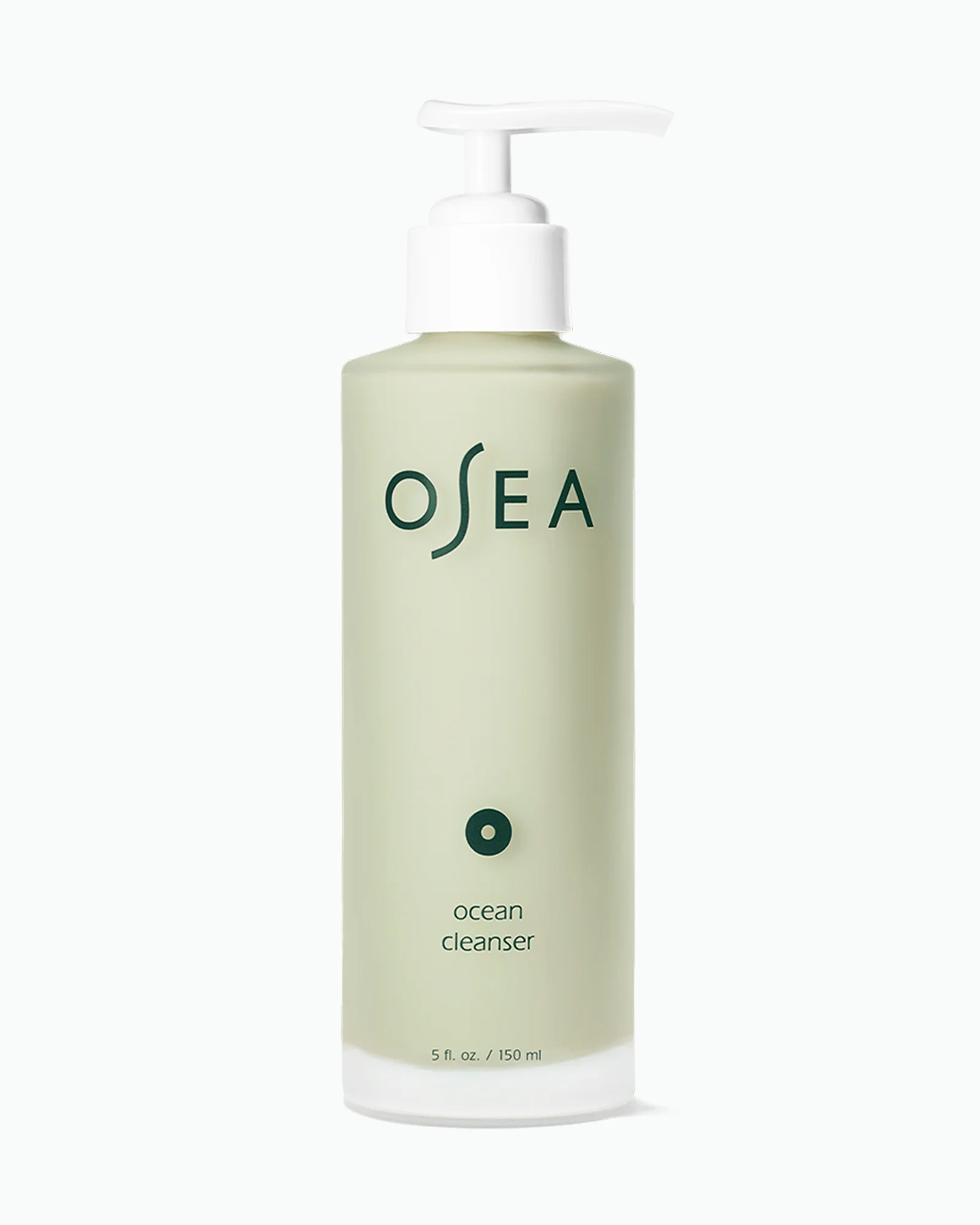
Our top recommendation: OSEA Ocean Cleanser
The OSEA Ocean Cleanser earns the top position in our cleanser database with an overall score of 8.6/10. It scores 9.5/10 for skin compatibility, 9.5/10 for ease of use, and 9.0/10 for brand trust. It carries our Age-Support flag and is the cleanser we would recommend across every skin type and decade.
Here is why it works specifically for sensitive skin:
- ◦Sulfate-free formula. No SLS, no SLES. The surfactant system uses OSEA's seaweed-based blend, significantly gentler than conventional cleansers.
- ◦Seaweed complex. Atlantic Kelp and Bladderwrack deliver antioxidant coverage and microbiome support during the cleansing step — unusual and genuinely valuable for sensitive skin.
- ◦Moisture-maintaining base. Aloe vera and glycerin help preserve the skin's moisture balance throughout cleansing, reducing post-wash tightness.
- ◦No synthetic fragrance. The product has a natural seaweed scent, which is worth a patch test for anyone with fragrance sensitivity. No synthetic fragrance is used.
- ◦Certified vegan and cruelty-free. Reef-safe. For those for whom brand ethics are part of the evaluation.
- ◦Comfortable immediately after rinsing. No tightness, no squeaky feeling, no residue. This is the clearest functional signal that a cleanser is respecting the barrier rather than stripping it.
Any cleanser you evaluate can be compared against this standard.
What to look for in other options
If you are evaluating outside the products we have reviewed, apply this checklist:
- ◦If pH is disclosed, look for 4.5–6.5
- ◦Scan the first five ingredients for SLS, SLES, or parfum/fragrance — if present, pass
- ◦Gel and cream or milk formats are generally safer for sensitive skin than heavy-foaming formulas
- ◦"Dermatologist-tested" and "dermatologist-approved" are unregulated claims — treat them as marketing language, not quality indicators
- ◦Look for third-party certifications where available: MADE SAFE, EWG Verified, or Leaping Bunny
On frequency and temperature
Two adjustments that cost nothing:
Once-daily cleansing is sufficient for many sensitive skin types. If you are not wearing heavy SPF or makeup in the morning, a water rinse in the morning and a proper cleanse only at night reduces your daily acid mantle disruption by half. For reactive skin, this single adjustment can make a meaningful difference.
Cooler water is better for sensitive skin than hot. Hot water disrupts the lipid matrix and causes vasodilation — both compound sensitivity and redness. Lukewarm or cool water is a free, no-product-required improvement that most people overlook.
On double cleansing
Double cleansing — an oil or balm first to remove SPF and makeup, followed by a water-based cleanser — is effective but requires care for sensitive skin. The first cleanse should be a genuinely gentle oil or balm with no essential oils, no synthetic fragrance, and minimal surfactant activity. The second cleanse should be your gentle, low-pH option. For days when you are not wearing heavy SPF or makeup, a single gentle cleanse is both sufficient and preferable.
You can compare cleanser scores directly in our product comparison tool and read the full rationale behind our scoring dimensions on the methodology page.