Vitamin C is one of the most studied, most marketed, and most inconsistently formulated actives in skincare. It earns the attention: ascorbic acid is the skin's primary water-soluble antioxidant, essential for collagen synthesis, and one of the few topical ingredients with strong evidence for supporting more even skin tone over time. But getting it into your skin in a form that actually works is harder than most brands let on.
The complication is stability. Vitamin C oxidizes. It degrades on exposure to air, light, and heat, and the most potent form — L-ascorbic acid — works best at a pH below 3.5, a condition that most formulators won't maintain because it sits close to the irritation threshold. The result: a category full of products that are technically vitamin C but practically unreliable, sold in clear jars that actively degrade the active they contain.
This guide covers the four forms of vitamin C you'll encounter, what separates a well-formulated product from one that will turn orange in your medicine cabinet, what concentration to start with if you're new to the active, and which product earns our highest score. No hype. No fear-based framing. Just the chemistry and the data.
The Four Forms of Vitamin C — And Why They Are Not Equal
You will see "vitamin C" on ingredient labels under several different names. They are not interchangeable.
L-ascorbic acid (LAA) is the direct, active form. It requires no conversion in the skin and has the strongest clinical evidence base. The problem is that it oxidizes rapidly — a product that starts clear will turn yellow, then orange, then brown as the active degrades. It also works most efficiently at pH 2.5–3.5, which is acidic enough to cause tingling or redness in skin that hasn't been introduced to it gradually. Well-formulated LAA products earn their price because the packaging and pH decisions required to preserve and deliver it cost more to get right.
Ascorbyl glucoside is a water-soluble, stable derivative that converts to free ascorbic acid after skin absorption. It works at a higher, gentler pH and has a meaningfully longer shelf life than LAA. The trade-off is reduced potency — the conversion step reduces the amount of active reaching the target. For sensitive skin or vitamin C beginners, it is often the more sensible starting point.
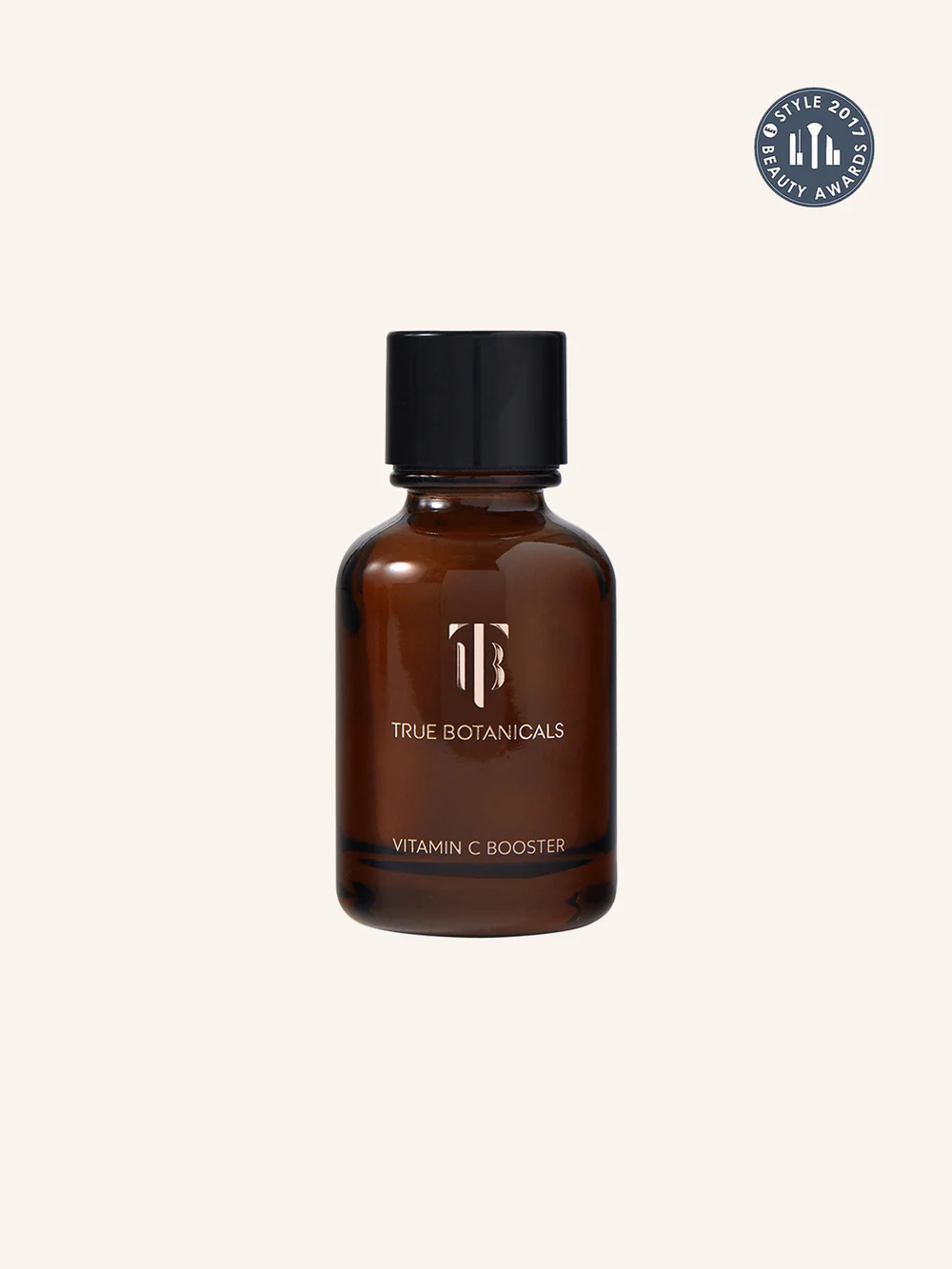
Tetrahexyldecyl ascorbate (THD ascorbate) is an oil-soluble form with exceptional stability and strong skin penetration. Because it is lipophilic, it distributes differently in the skin than water-soluble forms, with research suggesting deeper dermal penetration. It does not require a low-pH environment, making it well-tolerated across a wide range of skin types. This is the form used in the True Botanicals Vitamin C Booster — stabilized in dry powder for maximum shelf stability, then activated on contact with your serum or moisturizer.
Magnesium ascorbyl phosphate (MAP) is a water-stable, gentle option commonly found in sensitive skin formulations. It converts to ascorbic acid in the skin, maintains stability well across pH ranges, and is unlikely to cause irritation. Potency is moderate. For anyone rebuilding a compromised barrier, MAP is worth considering over LAA.
The hierarchy in practice: LAA delivers the most firepower but demands the most from formulation. THD ascorbate delivers highly bioavailable active in a format the skin tolerates broadly. For anyone prioritizing stability and tolerability over maximum potency, the stable derivatives are not compromises — they are better engineering.
Why Packaging Is Half the Formula
If there is one purchasing mistake worth avoiding in this category, it is buying vitamin C in a clear glass jar or a wide-mouth container. Every time that jar is opened, the active is exposed to air and light. By week six of daily use, you may be applying a product that has lost meaningful potency. The color change tells the story: colorless to yellow is moderate oxidation. Yellow to orange is significant degradation. Orange to brown is a product that has largely converted to dehydroascorbic acid — not useless, but not the active you paid for.
What preserves vitamin C: airless pump dispensers that minimize air contact per use. Opaque or dark-tinted packaging that blocks light exposure. Small orifices that prevent large-scale air introduction each time you open the bottle. Many well-formulated products also include ferulic acid and vitamin E as co-antioxidant stabilizers — both extend the shelf life of the active and enhance its efficacy in the formula.
The other variable worth understanding: pH. L-ascorbic acid penetrates the skin and works effectively at pH 2.5–3.5. Many products buffer the pH higher — to pH 4 or above — to reduce irritation. This is understandable, but it also reduces efficacy. Brands that publish their pH are more trustworthy than those that don't. If a brand won't disclose it, that is information too — see our guide to skincare marketing words that mean nothing for the fuller pattern.
Beginner vs. Advanced: What Concentration to Start With
If you have never used a vitamin C serum, the place to start is not the highest-percentage LAA on the market. Begin with either a lower concentration (5–10% LAA) or a stable derivative like ascorbyl glucoside or THD ascorbate, which do not require a low-pH environment and are inherently gentler on introduction.
The introduction protocol is the same as for other actives: apply once a day, every other day, for two weeks. Assess for redness or tightness. If the skin tolerates it, build to daily morning use. Apply on clean, dry skin before moisturizer. Vitamin C is a morning active — it buffers oxidative stress from UV and environmental exposure throughout the day and pairs naturally with SPF.
On timing with other actives: vitamin C and retinol are generally used at different times of day — vitamin C in the morning, retinol at night. Layering them at the same time can reduce the stability of both and increase irritation risk. For a full breakdown of how retinoids fit into a routine and which form is appropriate for your skin, see our guide to retinol vs. retinoids.
How These Products Scored
We scored vitamin C products on our eight-dimension rubric, weighting Ingredients & Safety and Results most heavily — in a category where formulation chemistry is the primary performance driver, ingredient quality and real-world efficacy matter more than packaging aesthetics or ease of use. See the full scoring methodology for how every dimension is weighted.
Tier S — True Botanicals Vitamin C Booster · 9.2/10 · $110
Our highest-scoring vitamin C product. The True Botanicals Vitamin C Booster uses THD ascorbate in a dry-powder format, which sidesteps the oxidation problem entirely — the active is stable until you mix it, activating on contact with your serum or moisturizer. The formula is certified MADE SAFE, includes ferulic acid and vitamin E as co-antioxidant stabilizers, and delivers a dose of fresh, unoxidized active every single use.
Score breakdown: Results 9.5 · Ingredients & Safety 9.5 · Skin Compatibility 9.0 · Brand Trust 9.5 · Price Value 8.0 · Feel & Experience 8.0 · Ease of Use 7.5 · Aesthetic & Packaging 9.0. The 7.5 on Ease of Use reflects the learning curve of the powder format — a small scoop mixed into your palm with your serum before application. For most people this becomes second nature quickly; for those who want a pump-and-apply experience, it is worth knowing upfront.
Age-decade scores peak in the 40s and 50s (9.5 each), reflecting where oxidative load and collagen synthesis support matter most. Score at 30s: 9.0. Score at 60s+: 9.0. Score at 20s: 8.0. This is a product that earns its full value across mid-life and beyond — and it shows in the numbers.
Mid-range tier — what to look for at $40–$80
At this price point, look for ascorbyl glucoside or THD ascorbate as the vitamin C source, ferulic acid as a co-antioxidant stabilizer, and airless pump or dark-glass tube packaging. Clear disclosure of concentration is a signal of formulation transparency — if a brand won't tell you the form of vitamin C or the percentage, that is worth weighing. Avoid vitamin C serums in clear wide-mouth jars regardless of the brand name on the front.
Budget tier — what to look for under $30
At budget price points, stable derivatives are almost always the better choice over LAA. Most budget LAA formulations cut corners on packaging or pH. Ascorbyl glucoside and MAP formulas are widely available at accessible price points — including on Amazon, where searching by ingredient type rather than brand claims is the more reliable strategy. Prioritize opaque packaging and a listed concentration over "brightening complex" vocabulary.
The Bottom Line
Vitamin C earns its place in a morning routine. The antioxidant protection, skin tone support, and barrier-adjacent benefits are real — and none of them require chasing the most aggressive LAA concentration available. What they require is a formula that actually keeps the active stable long enough to deliver it.
For skin in its 40s, 50s, and beyond, a well-formulated vitamin C is one of the most consistent performers in our database. The True Botanicals Vitamin C Booster is the best example of the category done right: stable by design, backed by transparent formulation, and earning a Tier S score for a reason.
Use the comparison tool to stack vitamin C products against other antioxidant actives in our database.
This post contains affiliate links. We may earn a commission if you purchase through them, at no cost to you. Affiliate relationships do not influence our scores or recommendations.