This post contains affiliate links. If you purchase through them, I may earn a small commission — at no cost to you. It doesn't change what I say or what I actually use.
There is something nobody tells you about your skin in your 40s. Not in a cautionary way and not in the "you've got this" way that is mostly just the positive-spin version of the same anxiety. Just a practical, genuine, kind of surprising thing: your skin starts talking to you more clearly.
In my 20s and 30s I was so busy trying to manage my skin — fix this, improve that, head off the next thing I was told to pre-emptively address — that I genuinely couldn't hear it. Too much talking, not enough listening. A long routine, a habit of testing new things, a general orientation toward my skin as something to be optimized toward a result I could never quite name.
Then I hit 40 and something shifted. I started noticing that my skin was more... immediate. More direct. If I sleep badly, it tells me immediately. If I'm stressed, it tells me. If I use something wrong for it, there's no ambiguity in the response. It's gotten more communicative with age. Which honestly I should have anticipated, because I have gotten more communicative with age and we are, after all, the same person.
The mirror stopped being something I monitored and became something that showed me information.
What the shift from controlling to listening actually looks like
I've written about stripping my routine back — in 40 Years, Two Products and in the mirror post — but this is something different. This isn't about minimalism as a philosophy or a trend. This is about noticing what my skin is actually asking for, which turns out to be a different question than what I assumed it needed at 33.
At 33 I was managing a projection. A version of my skin I was trying to prevent, a future I had been told to be afraid of, a checklist of interventions organized around looking younger at 40 than I actually would. I was in a relationship with an idea, not with my actual skin.
At 41 (as I'm writing this) my skin is genuinely drier than it was. It tells me very clearly when it's dehydrated. It wants to be nourished in a way that the resurfacing, brightening, active-stacking version of my routine was never quite designed to give it. It has less patience for things it doesn't like and more obvious gratitude for things it does. We have reached an understanding.
What this chapter looks like in practice: an oil as the foundation of the routine, morning and night. Water — actually drinking it, not assuming I've had enough. An exfoliant a couple of times a week and not more than that. Good sleep taking priority over a nine-step routine at midnight. Less product, more attention. More pausing to notice how my skin actually feels at the end of a day versus how I assumed it would feel.
The products that feel like genuine allies right now
I want to be careful about this. The glow I'm describing isn't coming from products. It is coming from less monitoring, more sleep, and the particular clarity that hits in the 40s when you realize you have limited energy and you want to use it on things that matter. Products are the medium through which I nourish my skin, and they are worth having good ones, but they're not the point. That said —
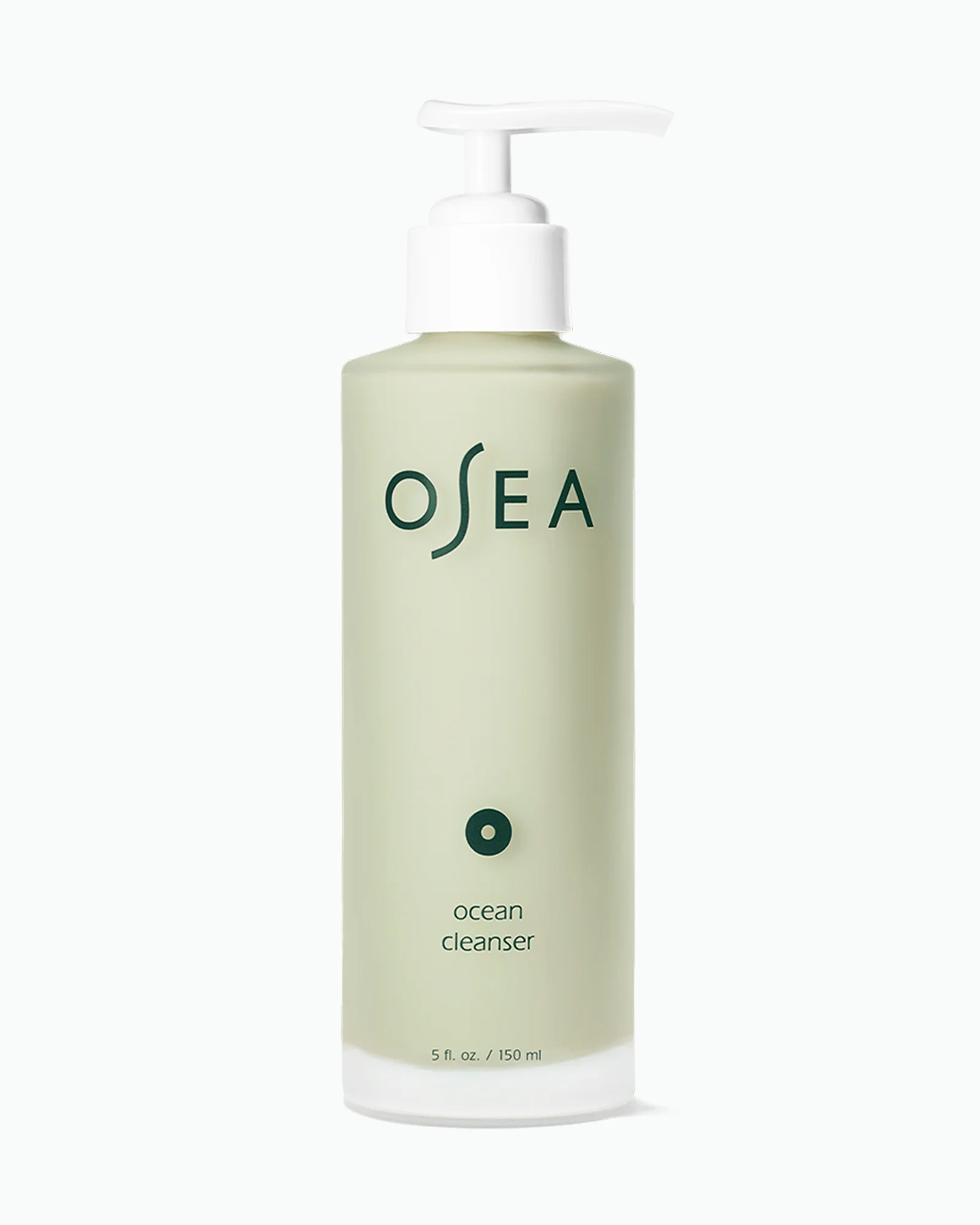
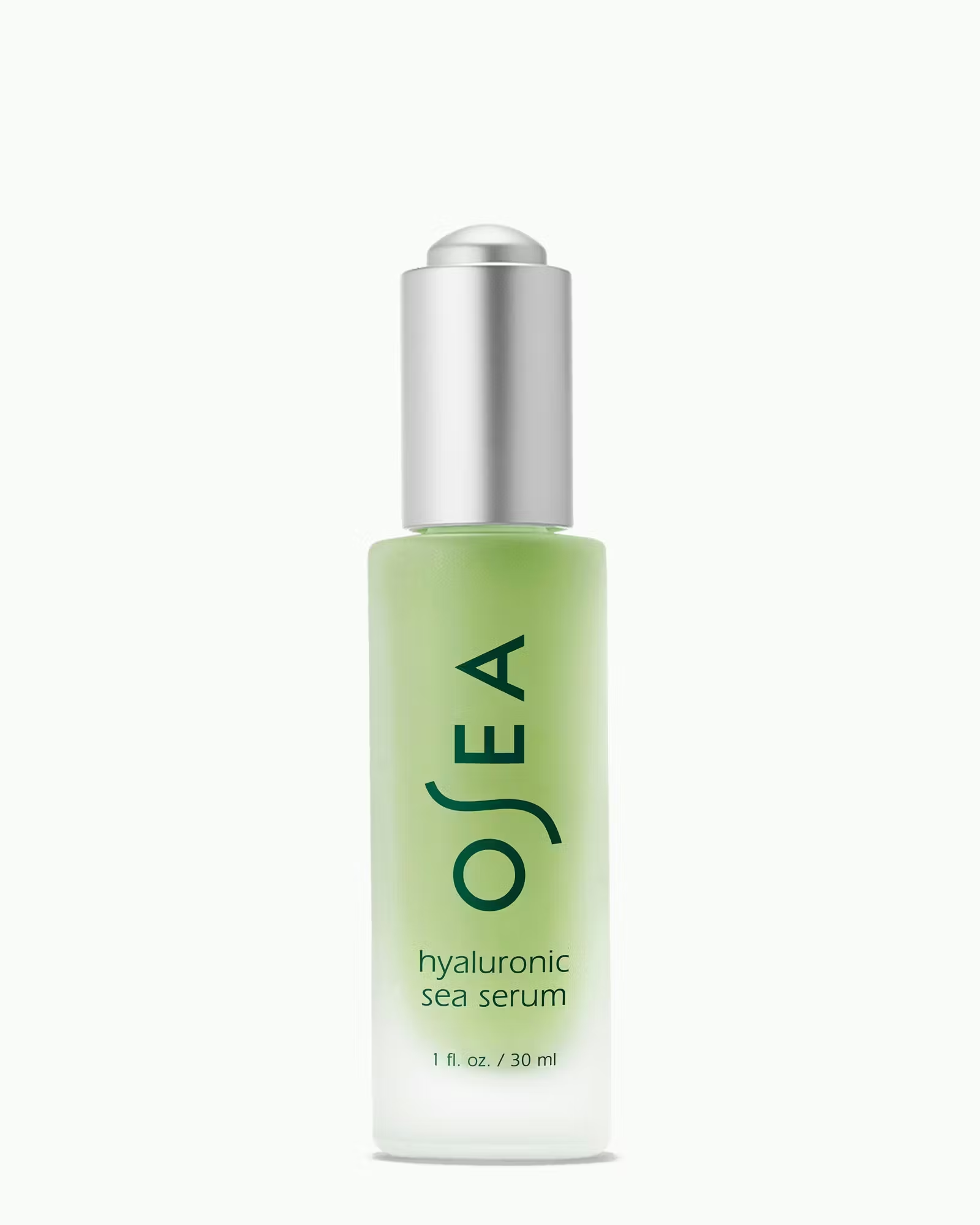
OSEA has been the constant across most of my adult skincare life and I'm not moving away from it. The Ocean Cleanser specifically — sulfate-free, seaweed-based, low-pH — leaves my skin genuinely comfortable after rinsing. Not stripped. Not tight. Not that particular kind of clean that is really just another word for "disrupted." For skin in the 40s that has become much more forthcoming about any insult, a cleanser that respects the barrier rather than dismantling it twice daily is not a small thing. Use code XOR10 for 10% off.
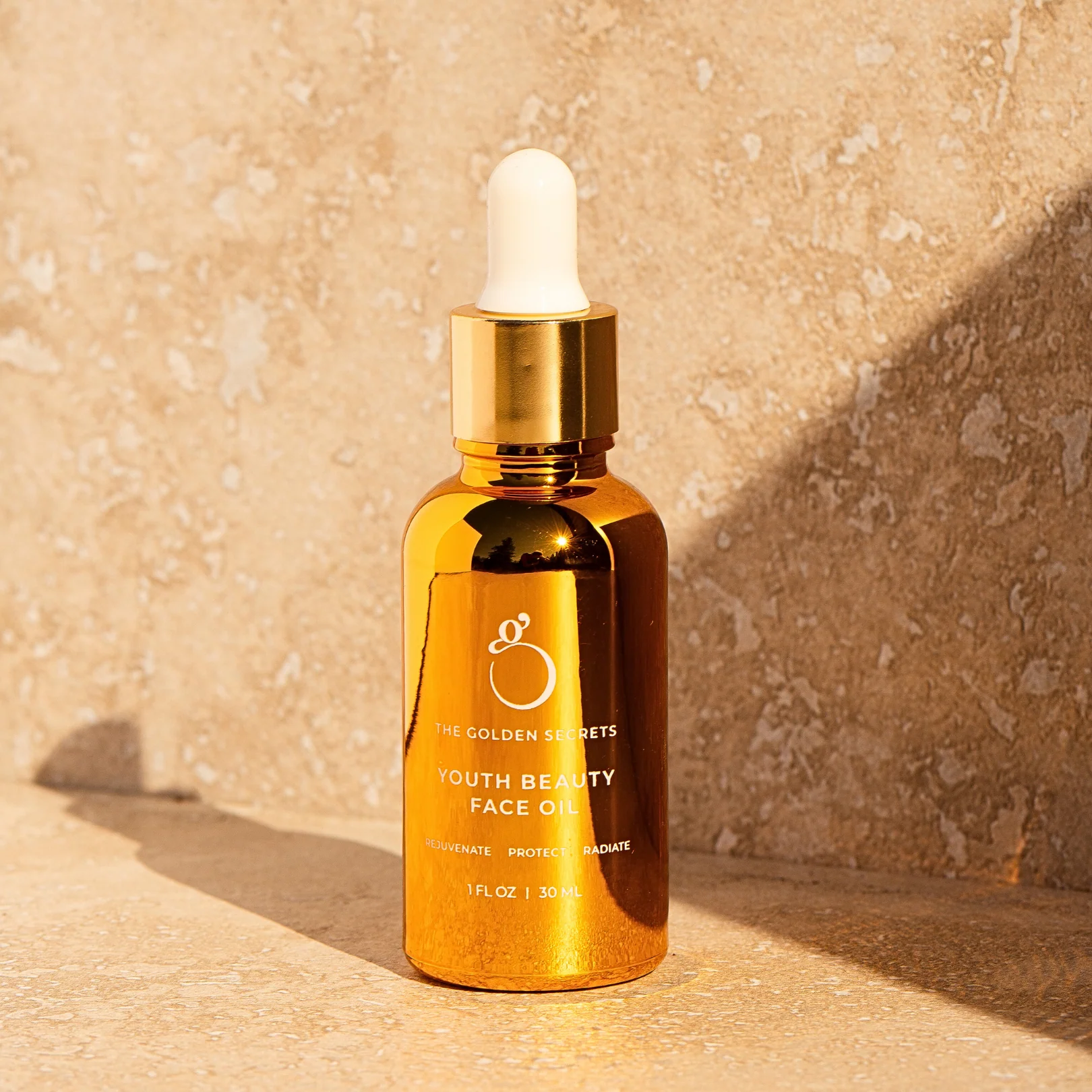
And the Golden Secrets Youth Oil is the one that makes my skin feel most like itself. I've been using it through my 30s and now into my 40s and I will not be parting with it. It's rooted in Ayurvedic tradition — 24k gold, rosehip, sea buckthorn, turmeric, plant stem cells — and it absorbs without heaviness, nourishes the barrier in a way I can feel rather than just know intellectually is happening, and genuinely feeds the skin rather than temporarily filling it in. For skin in this decade that is less interested in drama and more interested in being properly cared for, it just works. Use code XOR10 for 10% off.
These are not the products I want to use. They're the products I want to still be using thirty years from now. There's a difference in how that feels.
On the age-support thing, which keeps getting more personal
When I started building SkinCarePrice I had a philosophy about age-positive skincare that was honest but somewhat intellectual. I understood the argument. I could explain why the industry's framing was harmful. I had arrived at the position through observation and reasoning.
Now I'm in the middle of it. The philosophy is lived experience now, not just a position.
I look at my face in the morning and I make a choice, every single day, about whether to see it as something that needs defending or something that simply needs support. Most days I pick support and it's fine. Some days the decades of accumulated messaging sneak in anyway and I find myself zooming in in the way I know isn't useful. The work is not finished. I don't think it finishes.
What I know more clearly than I did five years ago: skin health and looking younger are not the same conversation. One serves you, one serves an industry. The hydration matters. The barrier integrity matters. The face oil matters. Not because any of it will make me look twenty-five again — it won't and I don't want it to — but because this skin is mine and I want to take genuinely good care of it for the next forty years, in the same way I'd take good care of anything I love.
The comparison tool exists because I believe you deserve to know exactly what you're buying and exactly what it does. Because the information should be clean and honest and not structured to make you feel afraid. I built this with that intention, and I keep showing up to it for the same reason I keep showing up to my actual face every morning: because it deserves to be seen clearly, without the noise.
Whatever your 40s look like — or your 50s, your 60s, whatever chapter you're in — I hope it feels less like something you're managing and more like someone you're finally getting to know.
xo, R.