The 30s are when skin starts sending different signals. Not dramatic ones, usually — this is not a cliff, it is a slope. Gradual, consistent, real changes that respond to different support than what worked in your 20s. Some of them are worth paying attention to. A lot of what gets marketed at you during this decade is not.
This is the companion post to our piece on skin in your 40s. The biology follows a continuum, and understanding what actually shifts in the 30s gives you better context for everything that follows.
What actually changes in your 30s
Four things are measurably different by your mid-to-late thirties:
Cell turnover slows. The epidermal turnover cycle that ran approximately 28 days in your 20s extends to somewhere between 35 and 45 days by the mid-30s. This is why dead skin accumulates more visibly, glow fades faster between exfoliation sessions, and products can feel like they absorb differently than they used to. The skin is not broken — it is just operating on a slightly slower schedule than before.
Collagen production begins its decline. The commonly cited figure is approximately 1% per year starting in the mid-to-late 20s. By your mid-30s, the cumulative effect is often becoming perceptible — subtle changes in resilience, slightly less snap-back after pressure, a texture that is harder to describe than to recognize. This is a long, slow process, not an event.
Sebum production starts to shift. Skin that was reliably combination-oily through the 20s may find itself more balanced, or edging toward combination-dry. The adjustment is usually subtle but can make previously tolerated mattifying products feel tight or stripping.
Hormonal fluctuations become more variable. Stress, changes in birth control, early perimenopause signals that can appear in the late 30s for some women — all of these affect the skin via overlapping mechanisms. Estrogen receptors are distributed throughout the skin's layers and its activity level influences hydration, inflammation, barrier integrity, and healing speed.
The collagen conversation (and what is actually true)
"Collagen cream" is one of the most profitable phrases in skincare marketing. The appeal is obvious: collagen is what gives skin structure, and declining collagen is a real phenomenon, so a product that delivers collagen directly should help. The problem is that topical collagen molecules are too large to penetrate the stratum corneum. They sit on the skin surface, provide some temporary hydration through film-forming, and disappear when you wash your face. They do not become structural collagen.
What actually supports collagen synthesis:
- ◦Vitamin C is a required cofactor in collagen biosynthesis. Without adequate vitamin C, the procollagen-to-collagen conversion pathway stalls. Topical vitamin C at meaningful concentrations — ascorbic acid or stable derivatives, in the first half of the ingredient list — delivers this support at the skin level.
- ◦Retinoids stimulate fibroblast activity, the cell type responsible for collagen production in the dermis. This is the strongest evidence in OTC skincare for influencing structural support over time.
- ◦Peptides — specifically signal peptides — work by mimicking collagen breakdown fragments, which signal the skin to upregulate production. Less potent than retinoids but gentler and compatible with more skin types.
- ◦SPF prevents UV-induced collagen degradation, which is quantifiably the largest driver of photoaging. The best pro-collagen product on the market is still a broad-spectrum SPF30+, used every morning without exception.
Stress, hormones, and skin in the 30s
The 30s are often a high-cortisol decade. Cortisol accelerates the breakdown of hyaluronic acid in the skin, increases inflammation, and compromises barrier function — all of which show up as dullness, dehydration, and unexpected sensitivity, often in people who did not previously have reactive skin.
This is not a skincare problem that can be fully solved with skincare. But it is a reason to not further stress an already stressed barrier with aggressive actives, over-exfoliation, or constant product switching. Consistent, gentle, supportive is the protocol that responds best to cortisol-affected skin — not more product, more often.
Women stopping hormonal birth control in their 30s sometimes see significant skin changes: oiliness, hormonal breakouts, shifts in texture. These are not signs of a broken routine. They are signs of the body readjusting its hormonal baseline. Most of these shifts stabilize within three to six months with a consistent, barrier-respectful routine and patience.
What to actually do about it
The 30s are a good time to build four pillars into a routine that will carry forward:
- ◦Consistent antioxidant coverage. A vitamin C serum, used in the morning, protects against free radical damage that accumulates with UV and pollution exposure. The cumulative benefit is significant even when the daily payoff is invisible.
- ◦Gentle, regular exfoliation. To compensate for slowing cell turnover. Once or twice weekly at appropriate concentrations — lactic acid or low-concentration glycolic, not daily aggressive use.
- ◦Hydration infrastructure. Hyaluronic acid applied to damp skin, sealed with a moisturizer or face oil, addresses the subtle dryness shifts that begin in the 30s before they become more pronounced.
- ◦SPF, used every morning. Not a 30s-specific recommendation — it matters at every age. But if you have not yet built the habit, your 30s are the most impactful time to start.
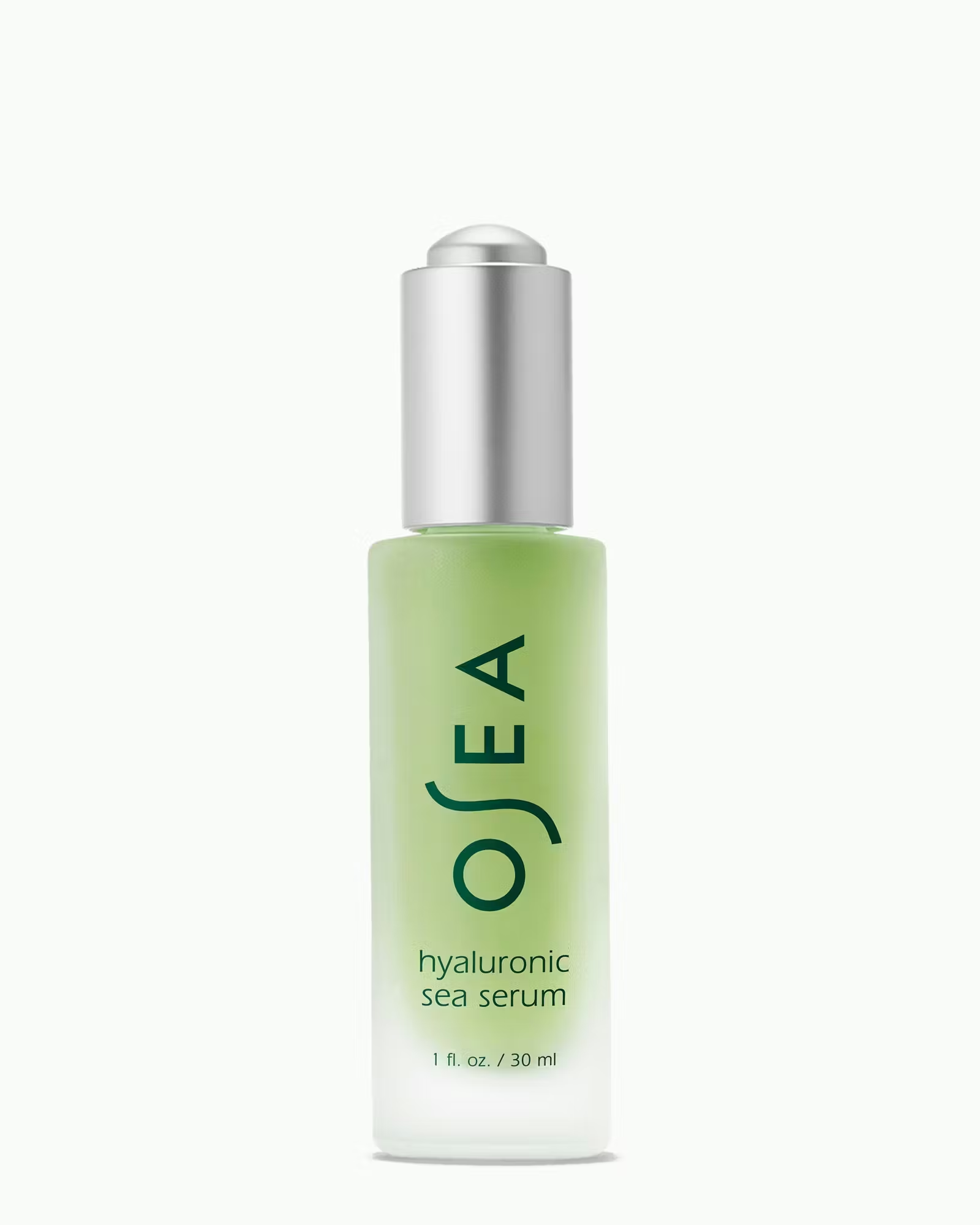
The OSEA Hyaluronic Sea Serum is what we recommend at this stage for HA layering — three molecular weights in a seaweed-based formula, scoring 8.8/10 with a 9.5 for skin compatibility.
What is hype
Anything marketed as "collagen cream" that does not contain a retinoid, a signal peptide, or a vitamin C derivative at meaningful concentration. Products that claim to "restore" or "reverse" collagen without those actives are selling the word, not the mechanism.
Over-exfoliation marketed as "brightening" or "resurfacing" as a daily habit. Daily exfoliant use in the 30s strips barrier faster than it can rebuild, creates the sensitivity and redness it claims to address, and does nothing for the structural concerns it implies.
Products specifically "for your 30s" that have no meaningful difference in formulation from products for any other decade. The marketing is targeting a demographic, not a biology. Read the ingredient list.
See the methodology page for how we weight each scoring dimension across product types.