Peptide serums are one of the fastest-growing categories in skincare, which means they are also one of the most inconsistently formulated. The ingredient is real — signal peptides have genuine clinical backing for supporting structural proteins over consistent use — but "contains peptides" covers a wide range of quality, from meaningful concentrations of palmitoyl-conjugated actives to trace amounts of amino acid chains buried after the preservatives. The label almost never tells you which you have.
This guide covers how we evaluated the category, which products score highest in our database for structural skin support, and what to look for when evaluating any peptide serum independently. For the full science on peptide types, penetration, and clinical evidence, see our companion piece on what peptides can and can't do.
One honest note upfront: the best-evidenced approach to skin structure support is not always a synthetic peptide serum. The highest-scoring products in this roundup work via mechanisms that are more robustly supported than most of the peptide-label market — and we scored them that way.
What the Scoring Framework Looked For
We evaluated structural skin support products across our standard eight-dimension rubric, but weighted Ingredients & Safety and Results most heavily in this category — because skin structure is exactly where formulation quality determines whether a product does anything at all. See the full scoring methodology for how each dimension is weighted.
Within the ingredient evaluation, four things separated the products worth recommending from the ones with peptides for marketing purposes:
Peptide type and conjugation. Palmitoyl-conjugated peptides (palmitoyl pentapeptide-4, palmitoyl tripeptide-1, palmitoyl tripeptide-5) are meaningfully more bioavailable than unconjugated versions of the same chains. Brands using the palmitoyl prefix and listing the specific peptide names are being more transparent than brands using "peptide complex" language.
Position in the ingredient list. Ingredients are listed in descending order of concentration. A peptide appearing after phenoxyethanol or ethylhexylglycerin — the common preservative pair — is likely below 0.5% and probably not at a clinically meaningful level regardless of how studied the molecule is in isolation.
Supporting ingredient quality. The best peptide formulas include hyaluronic acid (for hydration that supports the transport environment), niacinamide (for its complementary melanin-transfer inhibition and barrier support), and antioxidants that protect both the peptides and the existing collagen matrix from oxidative degradation. A peptide serum in an otherwise thin base is a missed opportunity.
Evidence for the specific formula, not just the ingredient. Independent clinical testing of the finished product — not in-house, not self-reported — is the most reliable signal. It is also rare. Brands that have it tend to mention it specifically and link to methodology. Brands that do not tend to cite "clinically inspired" in its place.
For dedicated peptide serums at the budget end of the category, see the budget section below. The mid-range and luxury picks in our database offer structural skin support via mechanisms that are, on balance, more robustly evidenced than much of the synthetic peptide market.
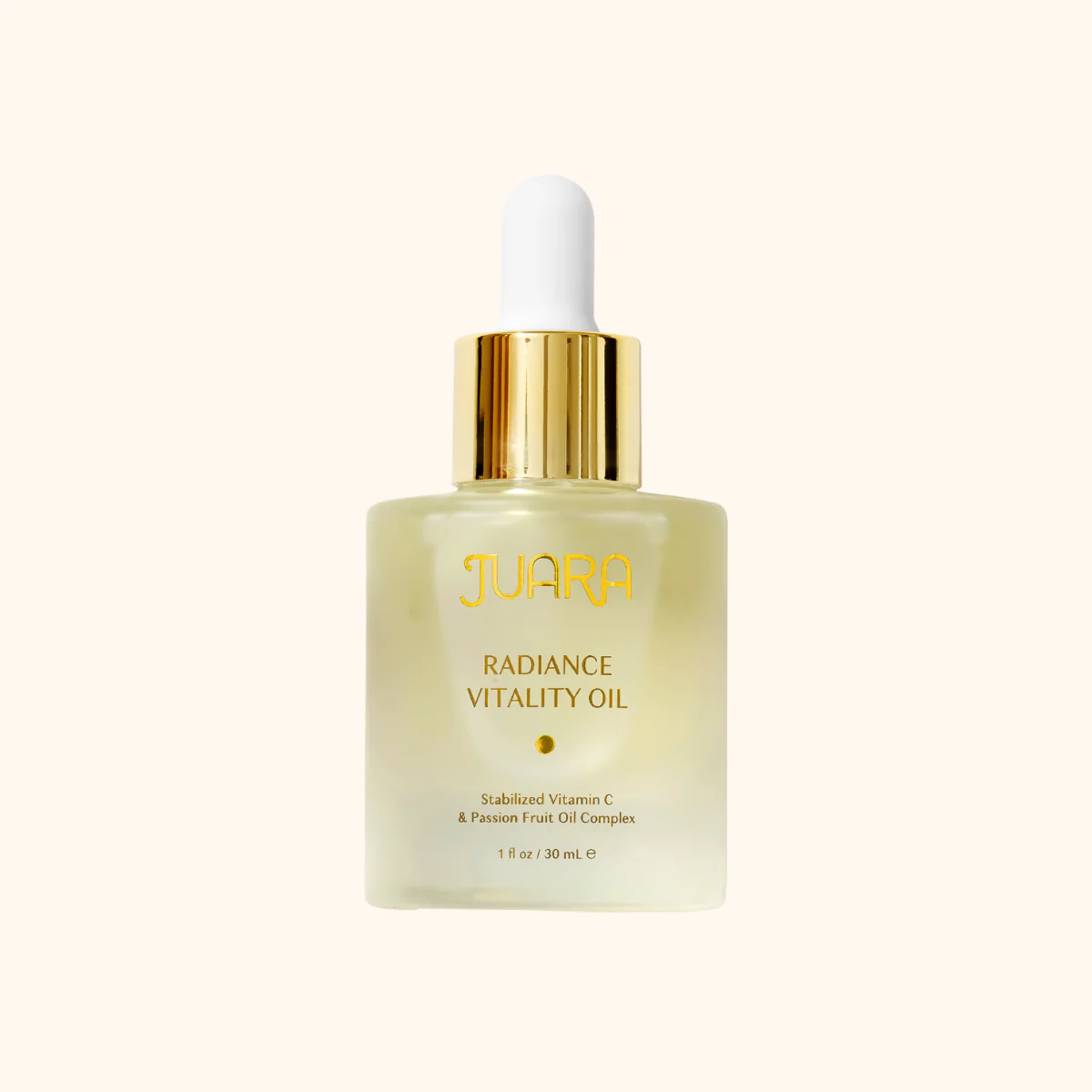
Mid-Range — Juara Radiance Vitality Oil · Tier A · 8.3/10 · $52
The Juara Radiance Vitality Oil does not take the synthetic peptide route to structural skin support. It takes the Jamu tradition route — centuries-old Indonesian botanical knowledge applied to a formula that addresses the skin's structural environment through antioxidant protection, barrier nourishment, and anti-inflammatory support rather than through direct collagen-signaling peptides.
This distinction matters, and we are being deliberate about it. Juara is not a peptide serum in the traditional sense. What it is: a well-formulated antioxidant and barrier oil with evidence-backed botanical actives that support the conditions under which the skin's own structural processes work best. Turmeric root has documented anti-inflammatory activity relevant to the oxidative stress that accelerates collagen degradation. Tamanu oil has wound-healing research behind it and is one of the more studied botanical oils for skin repair. Candlenut oil delivers oleic and linoleic fatty acid ratios that support the lipid matrix. Rosehip brings vitamin A precursors and fatty acids with barrier-restorative function.
Score breakdown: Results 8.5 · Feel & Experience 9.0 · Ingredients & Safety 8.5 · Brand Trust 8.5 · Price Value 8.5 · Ease of Use 8.5 · Skin Compatibility 8.0 · Aesthetic & Packaging 8.5.
Age-decade scores: 40s 9.0, 50s 9.0, 30s 8.5, 60s+ 8.5, 20s 7.5. The scores reflect where antioxidant and barrier-support nourishment matter most — skin past the 30s, where cumulative oxidative load is higher and where supporting the skin's existing structural environment has a clearer return. For a deeper look at what changes in skin physiology in the 40s and why antioxidant support becomes more valuable, see our piece on skin in your 40s.
Trade-offs: scented (turmeric and clove are present and perceptible), and the oil texture does not suit oily skin types. For fragrance-sensitive skin or skin prone to breakouts, this is not the right choice.
Best for: dry to normal skin in its 30s and beyond, looking for a nourishing antioxidant layer that supports the skin's own structural processes without introducing a new active protocol.
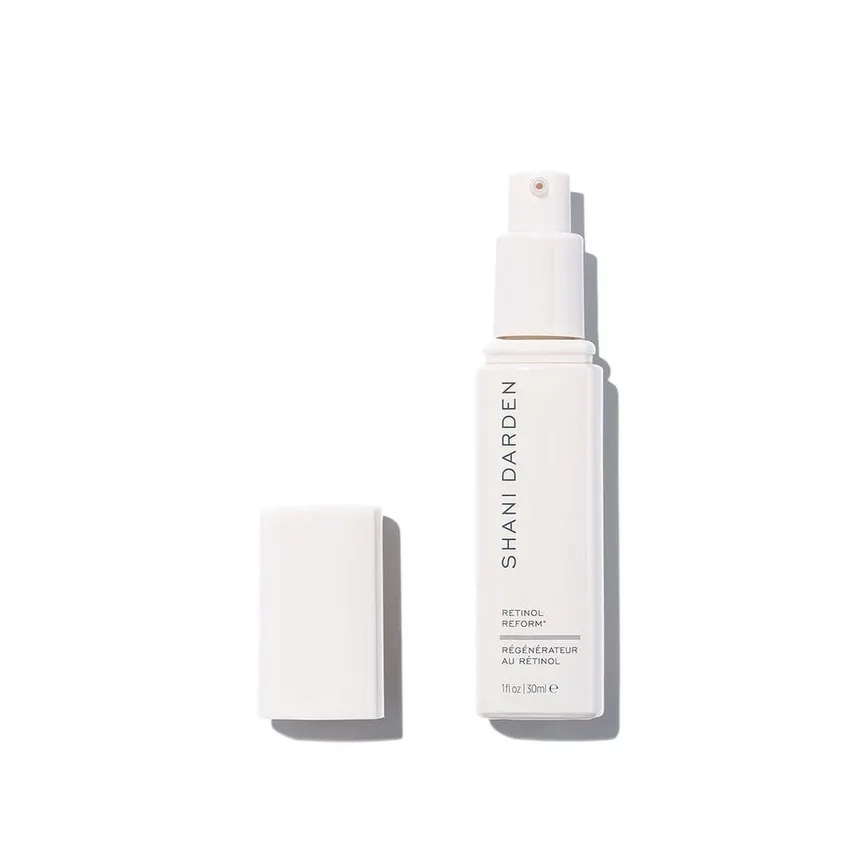
Luxury Tier — Shani Darden Retinol Reform · Tier S · 9.0/10 · $88
The most evidence-backed structural skin support serum in our database. The Shani Darden Retinol Reform does not lead with peptides — it leads with retinol, and there is a reason for that. The clinical evidence base for retinoids in skin structure is deeper and more consistent than for any peptide category, including the best-studied signal peptides.
The mechanism is cell turnover: 1% encapsulated retinol accelerates the replacement of surface skin cells, progressively surfacing less-damaged, more structurally sound skin from beneath. Lactic acid — an AHA — exfoliates at the surface level while also inhibiting melanin synthesis via a secondary pathway. Niacinamide at a meaningful concentration supports barrier function and inhibits melanin transfer to keratinocytes. Three mechanisms in one formula, with the retinol component carrying the strongest structural evidence available outside of a prescription.
Score breakdown: Results 9.5 · Brand Trust 9.5 · Aesthetic & Packaging 9.0 · Feel & Experience 8.5 · Ingredients & Safety 8.5 · Skin Compatibility 8.5 · Price Value 8.5 · Ease of Use 8.0.
Age-decade scores: 30s 9.5, 40s 9.0, 50s 8.5, 20s 8.5, 60s+ 7.5. The score pattern reflects where retinol does its most measurable work — skin that has accumulated meaningful texture and tone unevenness, typically from the 30s through 50s. At 60s+, the score accounts for the increased care required with retinol on skin that may have a less robust barrier at baseline.
Not ideal for: complete retinol beginners without an established barrier routine, skin that is acutely reactive or sensitized, or anyone wanting to avoid the standard retinol introduction protocol (once weekly, building slowly). For the full comparison of retinol vs. retinoid options and how to introduce either, see our guide to retinol vs. retinoids.
Pairing note: Shani Darden Retinol Reform works as a retinol-plus-structural-support evening serum. A dedicated peptide serum in the morning is an entirely compatible complement — they occupy different time slots and address the structural support goal through different, non-competing mechanisms.
Budget Tier — What to Look For Under $40
The budget peptide serum category has a real formulation quality problem. Most products in the sub-$30 range use peptides as a label claim rather than as a functional active — meaning the peptide appears on the front and below the preservatives in the ingredient list. At these concentrations, the evidence for any clinical effect is limited.
That said, well-formulated budget peptide options do exist. On Amazon, filter specifically for: palmitoyl pentapeptide-4 or palmitoyl tripeptide-1 listed by name (not "peptide blend"), appearing within the first fifteen ingredients, in a formula that also includes niacinamide or hyaluronic acid. Brands that list specific peptide names and positions are demonstrating more formulation transparency than brands using grouped "peptide complex" language.
The realistic expectation at budget price points: modest improvements in skin softness and texture over 8–12 weeks of consistent use, with the expectation that this is a maintenance-level intervention rather than a high-potency structural change.
Who Benefits Most From This Category
Skin in its 30s and beyond, where the cumulative effects of cell turnover slowdown and oxidative stress are becoming perceptible, gets the clearest return from structural skin support actives — whether peptides, retinoids, or the botanical antioxidant route. The mechanism varies; the goal (supporting the skin's own structural processes) is the same. For a science-based breakdown of what is actually happening in skin physiology from the 30s onward, see our piece on skin in your 40s, and for how structural support serums interact with hyperpigmentation concerns, our hyperpigmentation serum guide covers the overlap.
Skin that has established the foundational routine — barrier-safe cleanser, hydration, SPF — is ready for a structural support layer. Skin that is still calibrating those basics will see more return from getting the foundation right first. Structural actives add to a working routine. They do not replace one.
Use the comparison tool to stack these products against other structural support actives across our full database, and evaluate trade-offs across every scoring dimension.
This post contains affiliate links. We may earn a commission if you purchase through them, at no cost to you. Affiliate relationships do not influence our scores or recommendations.