This post contains affiliate links. If you purchase through them, I may earn a small commission — at no cost to you. It doesn't change what I say or what I actually use.
So apparently there's a word for it now. "Skinvestment." Everyone's using it like it's a fresh concept — treat your skin like a long-term asset, stop buying impulse serums, blah blah — and I'll be honest, my first reaction was to roll my eyes a little, because the beauty industry takes something true and turns it into a hashtag approximately four seconds after it stops being a useful private realization and becomes a marketing opportunity. But also... yeah. That's it. That's the thing. I just got there a different way, and a lot slower, and with a graveyard of half-used products to prove it.
I didn't wake up one day with a five-year skin plan. It was more like — I kept buying the next thing. The next serum that promised to be The One. The next mask, the next device, the next "holy grail" some woman with great lighting swore by on my phone at 11pm. And none of it was wrong exactly, a lot of it was genuinely well made, but I was treating my skin like a problem I hadn't thrown enough money at yet. Which is a very expensive way to never actually arrive anywhere.
The night I actually noticed the pattern
I remember the specific night, weirdly. I was standing in my bathroom holding a new serum I'd just bought — I don't even remember what it claimed to do, brightening probably, it's always brightening or firming — and I had this very unceremonious thought: I have eleven products in this cabinet and I could not tell you with a straight face which ones are doing anything. I just kept adding. Adding felt like progress. Adding felt like control. If my skin did something I didn't love, the answer was never "let me sit with this and figure out what's actually happening," it was "let me buy the thing that fixes it by Thursday."
That's not investing in your skin. That's the opposite of investing in anything — that's churn. I'd recognize it instantly in any other part of my life. Nobody calls flipping through five different financial advisors in a year "investing." But somehow with skin we call it self-care.
I've written before about stripping my whole routine back to two products, and about learning to actually listen to what my skin is telling me instead of managing some imagined future version of it. This is sort of the financial cousin of both of those essays. Because once I stopped chasing and started paying attention, the buying changed too. Not less spending, necessarily — sometimes more, on the right things — just... different math entirely.
What slowing down actually looked like, in practice
It looked boring, honestly. It looked like not buying something the week it launched. It looked like using a product for three full months before deciding whether it was working, instead of two weeks and a bad skin day prompting a full router. It looked like asking "what is this actually doing, mechanistically, and do I believe the evidence" instead of "does the packaging make me feel like I have my life together."
The difference between buying more and buying better is not really about price, which surprised me. I've spent $12 on something genuinely good and $90 on something that did nothing. It's about whether the thing in your hand is solving a problem you actually have, formulated well enough to do it, and whether you're going to still want it in a year — not whether it's new, or trending, or promising to undo something about your face that didn't need undoing in the first place.
Two products ended up carrying basically my whole philosophy on this, and I didn't pick them because they're trendy, I picked them because three, four, five years later I still reach for them without thinking, which at this point is the only review that matters to me.
OSEA's Ocean Cleanser is the one I genuinely never think about replacing — which sounds like faint praise but is actually the highest compliment I have. Sulfate-free, seaweed-based, doesn't strip anything, doesn't leave my skin squeaking in that fake-clean way some cleansers do. It's not exciting. It's just correct, every single day, which is exactly what a cleanser's whole job is. Use code XOR10 for 10% off if you want to try it.
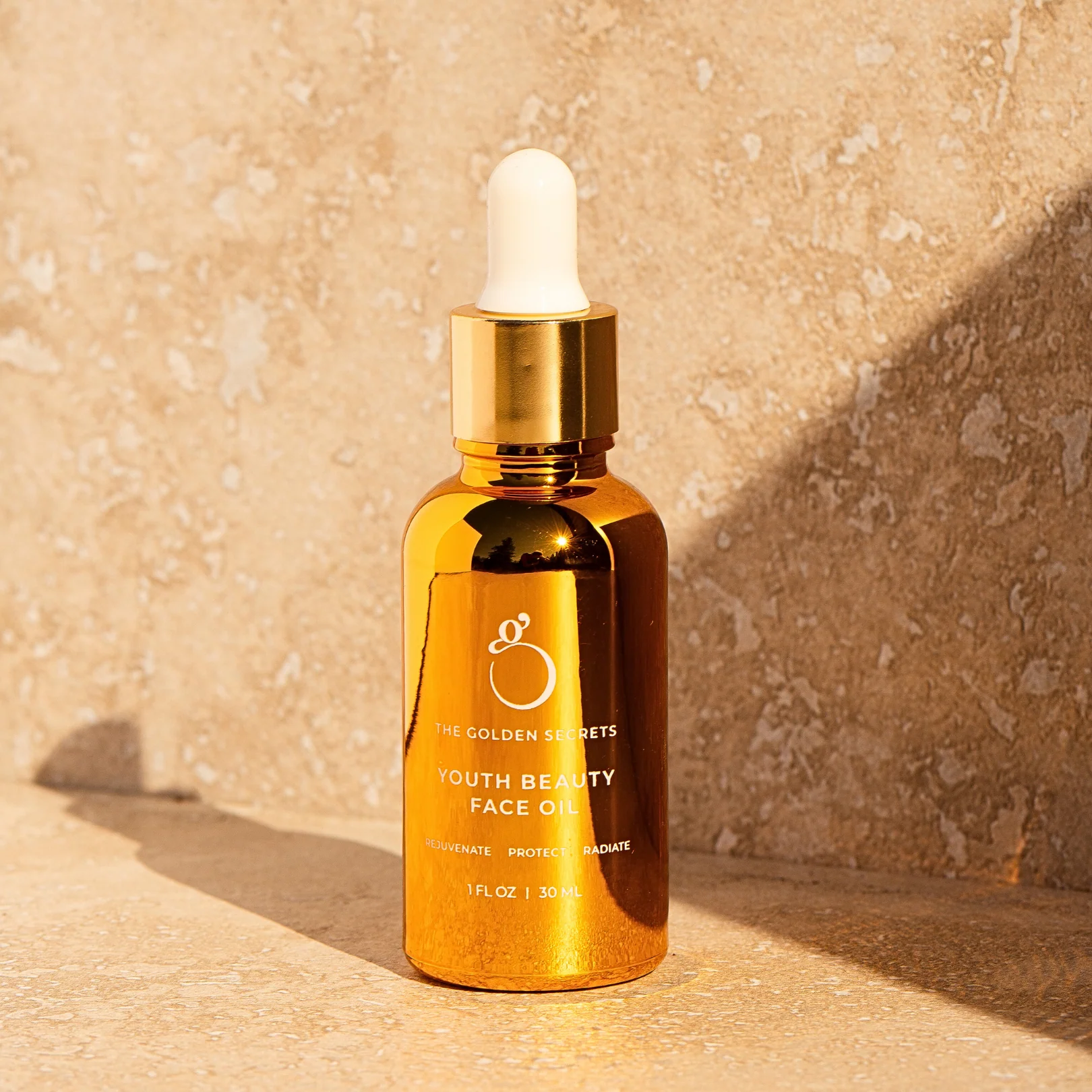
And the Golden Secrets Youth Oil is the one that, if I'm being fully honest, made me understand the difference between a product that performs for a season and one that's actually built into your skin's rhythm. 24k gold, rosehip, sea buckthorn, plant stem cells — it's rooted in Ayurvedic tradition rather than this-quarter's ingredient trend, and it shows in how it behaves. It doesn't sit on top of my skin feeling like a treatment. It feeds it. I've used it through my thirties and now my forties and there is no serum-of-the-month that has tempted me away from it, not once. Same code, XOR10, for 10% off, if you're curious.
That's the whole "skinvestment" thing, distilled: not buying less out of austerity, but buying fewer things that you actually trust enough to keep.
Why this is the same conversation as age-support, really
Here's where it all connects for me, and it took longer than I'd like to admit to see it. Chasing quick fixes and chasing youth are basically the same impulse wearing different outfits. Both are a refusal to sit with what your skin is actually doing right now, today, at whatever age you are. Both treat the present version of your skin as a temporary, unfortunate state on the way to some better, fixed one.
Slowing down meant I stopped asking "what will make this go away" and started asking "what does this need." Which is, not coincidentally, the entire premise behind what skin support actually means as a philosophy — giving your skin what it needs to do its own job well, instead of waging a quiet, expensive war against it one serum at a time. The skinvestment people are talking about right now, the patience, the consistency, the long view — that's not new marketing language to me. That's just what's left once you stop running.
If you're sorting through your own cabinet trying to figure out what's actually earning its place, our comparison tool is built for exactly that — less "what's trending," more "what does the evidence say this is actually doing, and is it worth what you're paying for it." I wish I'd had something like it a decade and several abandoned serums ago.
I'm not done evolving this, I don't think any of us ever really are. But I'm done buying my way out of a feeling. The next great serum can wait. My skin and I are fine.
xo, R.