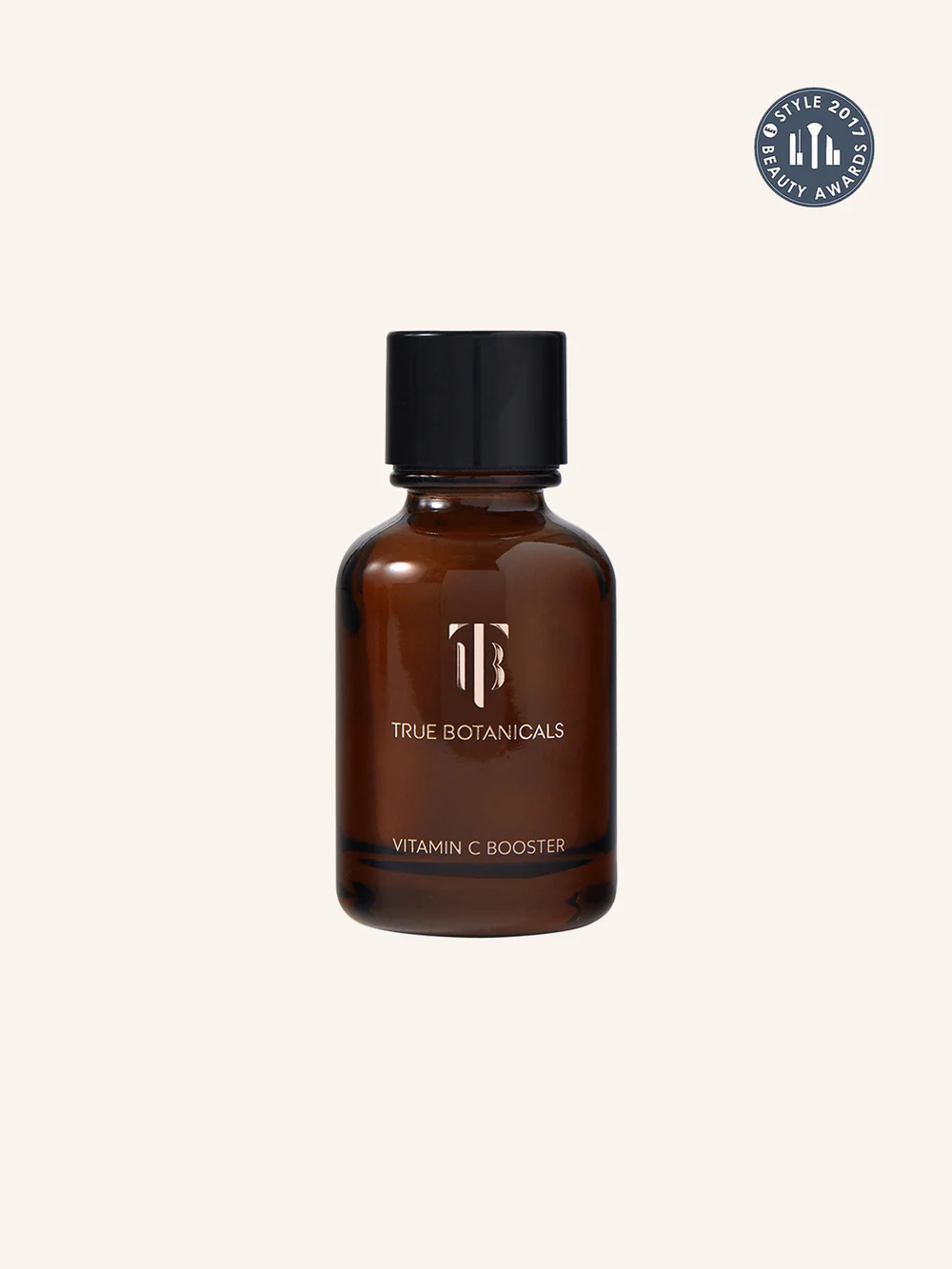
Vitamin C has one of the strongest evidence bases in topical skincare. It is the skin's primary water-soluble antioxidant, a co-factor in collagen synthesis, and one of the few ingredients with consistent peer-reviewed support for improving skin tone over time. It is also one of the most frequently sold in forms that barely work.
The problem is not the ingredient. The problem is that the most potent form — L-ascorbic acid — is inherently unstable, requires an acidic environment to function, and degrades on exposure to air and light in a way that most consumers never see coming. The industry has responded to this inconvenience with a range of more stable derivatives, packaging decisions of variable quality, and a marketing vocabulary that obscures which type of product you are actually buying.
This guide covers the full picture: what the different forms actually are and what distinguishes them, what pH has to do with any of it, how to recognize oxidation before you apply a degraded product, and how to layer vitamin C without undermining either it or the actives it needs to coexist with.
The Vitamin C Family: Four Forms, Four Trade-offs
"Vitamin C" on a label can mean several different molecules. Understanding which one you have — and what that means for efficacy and stability — is more useful than any amount of marketing copy.
L-ascorbic acid (LAA) is the primary, direct form. It requires no conversion in the skin, has the broadest clinical evidence base, and is the form used in most high-potency vitamin C serums. Its limitation is instability: it oxidizes on contact with air, light, and heat, and it works most effectively at pH 2.5–3.5 — a range acidic enough to cause tingling or redness in skin that has not been gradually acclimated. Well-formulated LAA products manage these constraints through packaging design and supporting chemistry, but the constraints are real regardless of how well the product is made.
Ascorbyl glucoside is a water-soluble, pH-stable derivative that converts to L-ascorbic acid after absorption into the skin. It is gentler, longer-lasting on the shelf, and better suited to sensitive or reactive skin. The trade-off is potency — the conversion step reduces the amount of active ultimately available at the target site. For everyday antioxidant protection and gradual tone support, it is a reasonable choice. For those seeking maximum efficacy, it is a meaningful step down.
Tetrahexyldecyl ascorbate (THD ascorbate) is oil-soluble, highly stable, and does not require a low-pH environment to penetrate the skin. Research suggests it may reach the dermal layer more efficiently than water-soluble forms because of its lipophilic chemistry. It does not produce the oxidation discoloration associated with LAA and performs reliably across a wide range of formulation conditions. It is increasingly the form of choice in well-formulated products for exactly this reason — it eliminates the stability problem while retaining meaningful bioavailability.
Ascorbyl phosphates (sodium ascorbyl phosphate, magnesium ascorbyl phosphate) are water-stable derivatives that release ascorbic acid after absorption into skin. Sodium ascorbyl phosphate has additional data for supporting clear skin. Magnesium ascorbyl phosphate is gentle enough for sensitive or barrier-compromised skin. Both are legitimate vitamin C forms at a moderate potency level — appropriate for daily maintenance and for skin that finds LAA difficult to tolerate.
The hierarchy is not a ranking from good to bad. It is a continuum from maximum potency with maximum formulation demands (LAA) to broad tolerability with stable but moderate efficacy (the stable derivatives). Which point on that continuum makes sense depends on what the skin can tolerate and what it actually needs.
The pH Problem — Why It Matters More Than Concentration
L-ascorbic acid at 20% in a formula buffered to pH 5 is less effective than L-ascorbic acid at 10% in a formula buffered to pH 3.0. The concentration number dominates the marketing — bigger percentage, bigger claim — but pH determines whether that concentration can actually penetrate the stratum corneum.
The mechanism: the non-ionized form of ascorbic acid, which exists predominantly at pH below 4, is the form that penetrates lipid-rich skin membranes. At pH above 4, an increasing proportion of the molecule is in its ionized form, which is less membrane-permeable. A product with a buffered-up pH has neutralized a meaningful portion of what makes the active work. This trade-off is almost never disclosed on the label.
Brands that publish their formulation pH are signaling a level of transparency worth noting. Brands that describe their formula as "a proprietary vitamin C complex" without further detail are almost always obscuring something — the form, the concentration, the pH, or all three. The broader pattern is covered in our guide to skincare marketing words that mean nothing.
The practical implication: if you have been using an LAA serum consistently for three to four months and see no effect, the most likely explanation is not that vitamin C does not work for your skin. It is that the formula is buffered higher than optimal, the packaging has allowed oxidation, or the concentration is lower than labeled. Switching to a stable derivative in better packaging is often more productive than chasing a higher-percentage LAA in the same compromised conditions.
Oxidation: What It Looks Like and What to Do About It
A fresh L-ascorbic acid serum is colorless or very pale yellow. As it oxidizes, the color progresses:
- ◦Pale yellow to medium yellow: moderate degradation, still active but declining
- ◦Yellow to orange: significant oxidation, meaningfully less potent
- ◦Orange to brown: largely converted to dehydroascorbic acid and other byproducts — limited value as a vitamin C serum
Applying an oxidized serum is not dangerous, but it is not delivering what you paid for. If a sealed product arrives already yellowed, it was degrading before it reached you. This is a formulation and supply chain problem, not a product failure you can work around.
The preventive measures are entirely packaging-dependent: airless pump dispensers reduce air contact per use; opaque or dark-tinted bottles limit photodegradation; small-orifice openings prevent large-scale air introduction each time. The inclusion of ferulic acid and vitamin E in the same formula meaningfully extends LAA shelf stability — they are co-antioxidants that protect each other in solution.
For stable derivatives — THD ascorbate, ascorbyl glucoside, the ascorbyl phosphates — this oxidation discoloration does not apply. They degrade by different mechanisms that do not produce the same color change. You can tell when LAA has gone off; with stable derivatives, the product looks the same throughout its shelf life. This is one of their practical advantages beyond formulation tolerability.
Storage: keep vitamin C in a cool, dark location. Heat and light accelerate oxidation. Refrigeration extends product life meaningfully, especially for LAA in non-airless packaging.
How to Layer Vitamin C With Other Actives
Vitamin C and retinol. These are not layered in the same step and are generally not used in the same routine slot. Both are actives with their own pH requirements and irritation profiles, and combining them at the same time can reduce the stability of each while amplifying the irritation potential of both. The standard protocol is vitamin C in the morning — where it buffers environmental oxidative stress throughout the day — and retinol at night. Both actives are used consistently; they simply occupy different time slots. For a deeper look at how to select and introduce a vitamin C product, see our vitamin C buying guide.
Vitamin C and niacinamide. An older concern that current research does not fully support. The theoretical worry was that combining the two would form niacinamide-ascorbate complexes that yellowed the skin. This reaction requires high concentrations and prolonged heat exposure beyond what occurs in normal topical use. Using both in the same routine — and even in the same application step — is generally not a problem for most people. If your skin is sensitive to either active, separating them as a precaution is reasonable. But the categorical "never mix vitamin C and niacinamide" guidance circulating in some communities is not well-supported by the actual chemistry.
Vitamin C and low-pH acids. If you are using LAA at its functional pH range and also using an AHA or BHA, layering them directly together may push the skin's surface acid environment beyond what is necessary for either to work — with irritation as the result rather than a compounding benefit. Morning vitamin C, evening exfoliant, is the cleaner protocol. Stable derivatives are less pH-sensitive and coexist more easily with other actives in the same routine slot.
After vitamin C: supporting the barrier. Following vitamin C application — particularly for LAA — with a hydrating layer that supports barrier function makes the active easier to tolerate and the overall formula stack more effective. The layering pattern that works consistently: vitamin C on clean, dry skin; hyaluronic acid on top while skin is still slightly damp; a lightweight moisturizer or face oil to seal. Our guide to what hyaluronic acid actually does explains why the application order and timing within this sequence matters. Our piece on the skin barrier covers why protecting barrier integrity alongside active use is not optional — it is what makes the actives sustainable over time.
What Vitamin C Actually Does for Mature Skin
The case for vitamin C in a routine is strongest — and the practical stakes of formulation quality are highest — for skin in its 40s, 50s, and beyond. The reasons are cumulative: oxidative load from years of UV and environmental exposure is higher; antioxidant defense is a more active need, not a theoretical one. The skin's own ascorbic acid stores decline with age. And the tone-support evidence — consistent, gradual improvement in evenness and radiance — holds across decades, in skin that benefits from a well-formulated active more than from another layer of moisturizer.
None of this is about reversing anything. Vitamin C supports the skin's own antioxidant capacity. It helps maintain the conditions for collagen synthesis. It contributes to the even, clear surface that is as much about barrier health as about anything else. These are things worth doing at any age, for skin health rather than in pursuit of looking younger.
The return on investment is highest when the form matches the skin's tolerance, the packaging protects the active, and the layering protocol is clean.
For specific product recommendations, our vitamin C serum buying guide covers the top picks at each tier. To compare vitamin C products against other antioxidant actives in our full database, use the comparison tool. The scoring methodology explains exactly how Ingredients & Safety, Results, and Skin Compatibility are weighted when we evaluate any active.